01Set the use case and intensity
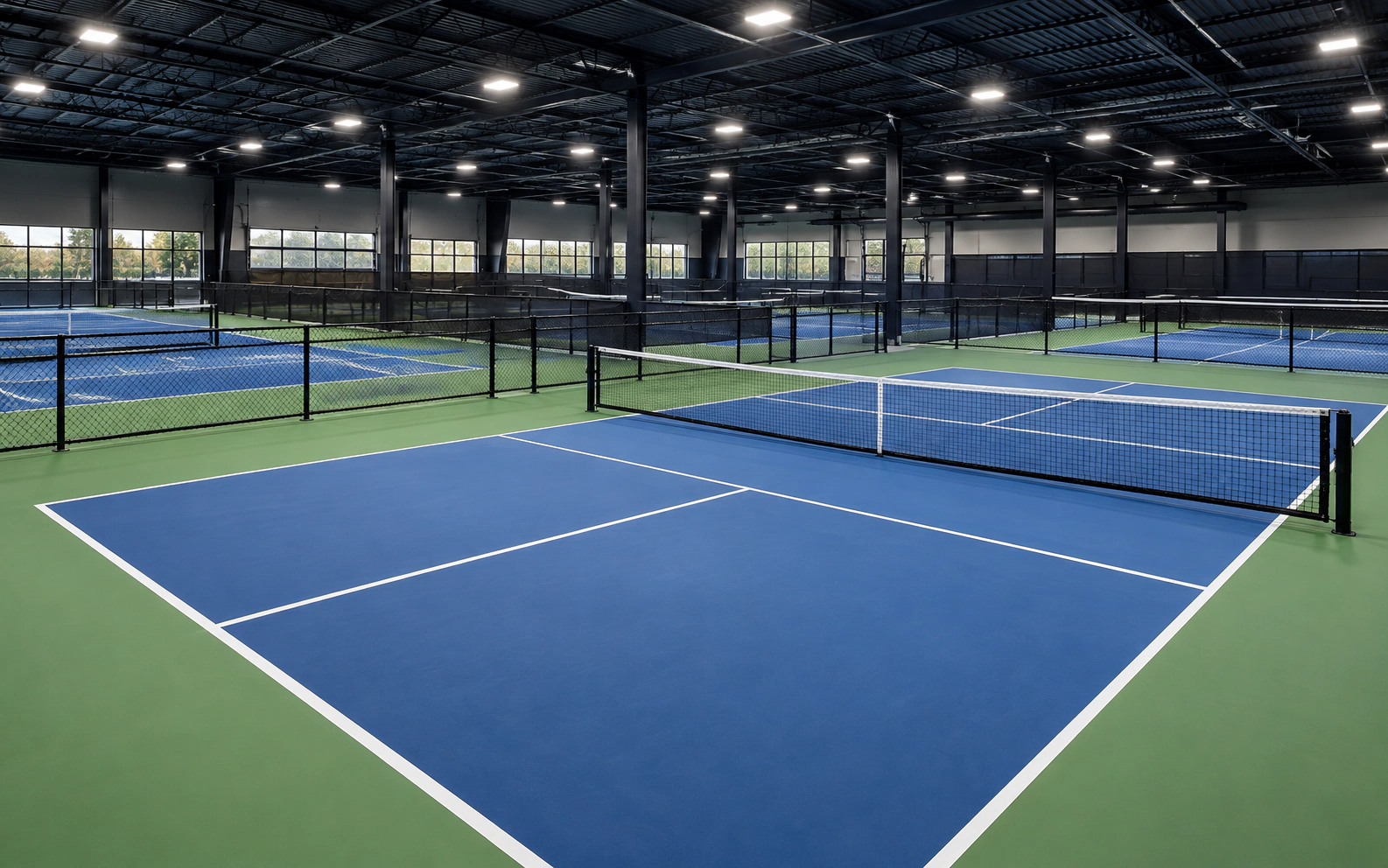
List the sports that must be played, their participation level, competition requirements, expected hours of use, footwear, likely equipment loads and whether the facility is permanent, temporary or seasonal. A multipurpose hall floor and a dedicated external pickleball court are different projects.
Separate mandatory technical standards from desirable finishes or conveniences. Where a governing body certification is claimed, check that it applies to the exact model, system and scope—not simply the supplier's name or another product in its catalogue.
Plan the entire court, not just its playing surface
Court dimensions alone do not define the usable facility. Account for run-offs, access, doors, barriers, equipment storage, spectator circulation, supervision, cleaning machines and any sport-specific net or post foundations.
If a venue is being converted, survey the substrate, moisture, slope, flatness and available ceiling height before selecting products. A removable or interlocking floor may not compensate for a defective base.
Treat lighting and acoustics as part of procurement
For sports lighting, record the activities, required competition category, indoor or outdoor use, glare limitations, uniformity, control zones and maintenance access. Use project-specific professional design instead of advertising a general light output as a guaranteed lux level on the court.
For busy indoor halls, acknowledge reverberation, ball impacts and adjacent classroom or residential neighbours. Acoustics, lighting and surface selection should be coordinated early to avoid costly late changes.
Document supply, delivery and installation boundaries
A quotation should clearly identify product model numbers, quantities, accessories, freight term, packaging, maintenance guidance, technical data, any model-specific certification, spare parts and exclusions.
Apollo NZ Global supplies selected sports systems and supporting documents. The client's appointed contractors remain responsible for local survey, base preparation, installation, health and safety, engineering and statutory requirements unless a written project scope states otherwise.
Compare offers on lifecycle performance
A lower initial supply price may exclude line marking, edge pieces, spare tiles, storage or freight. Ask each supplier to price the same bill of quantities and distinguish mandatory scope from optional equipment. Consider replacement-part availability and how the surface will be inspected and cleaned.
For council and school procurement, record who approves the technical specification, who accepts the delivered goods, who signs off installation and which evidence must be supplied before practical completion.
Prepare the first RFQ package
Include a scaled site plan, photographs, intended sport and user group, target dimensions, traffic levels, indoor or outdoor conditions, existing substrate, delivery location and construction programme. Add a list of standards that genuinely apply to the intended event or activity.
Use Apollo's sports flooring and facility pathways to shortlist systems before requesting project-specific technical information.