Commercial projects · Holiday parks & touring facilities
Holiday Park Shade and Outdoor Recreation Infrastructure
Holiday parks and campground operators manage several different outdoor spaces at once. Reception areas, communal cooking, campervan sites, play zones and recreation facilities have different maintenance, access and weather requirements. A supply package should follow those uses instead of treating every space as a generic pergola.
Planning guidance — final supplied configuration remains project-specific.
01
Map the guest journey before choosing products
Walk the site from arrival to parking, amenities, cooking, recreation and departure. Identify where guests queue, where wheelchairs and mobility aids need clear access, where vehicles turn and where shade is most valuable during peak summer periods.
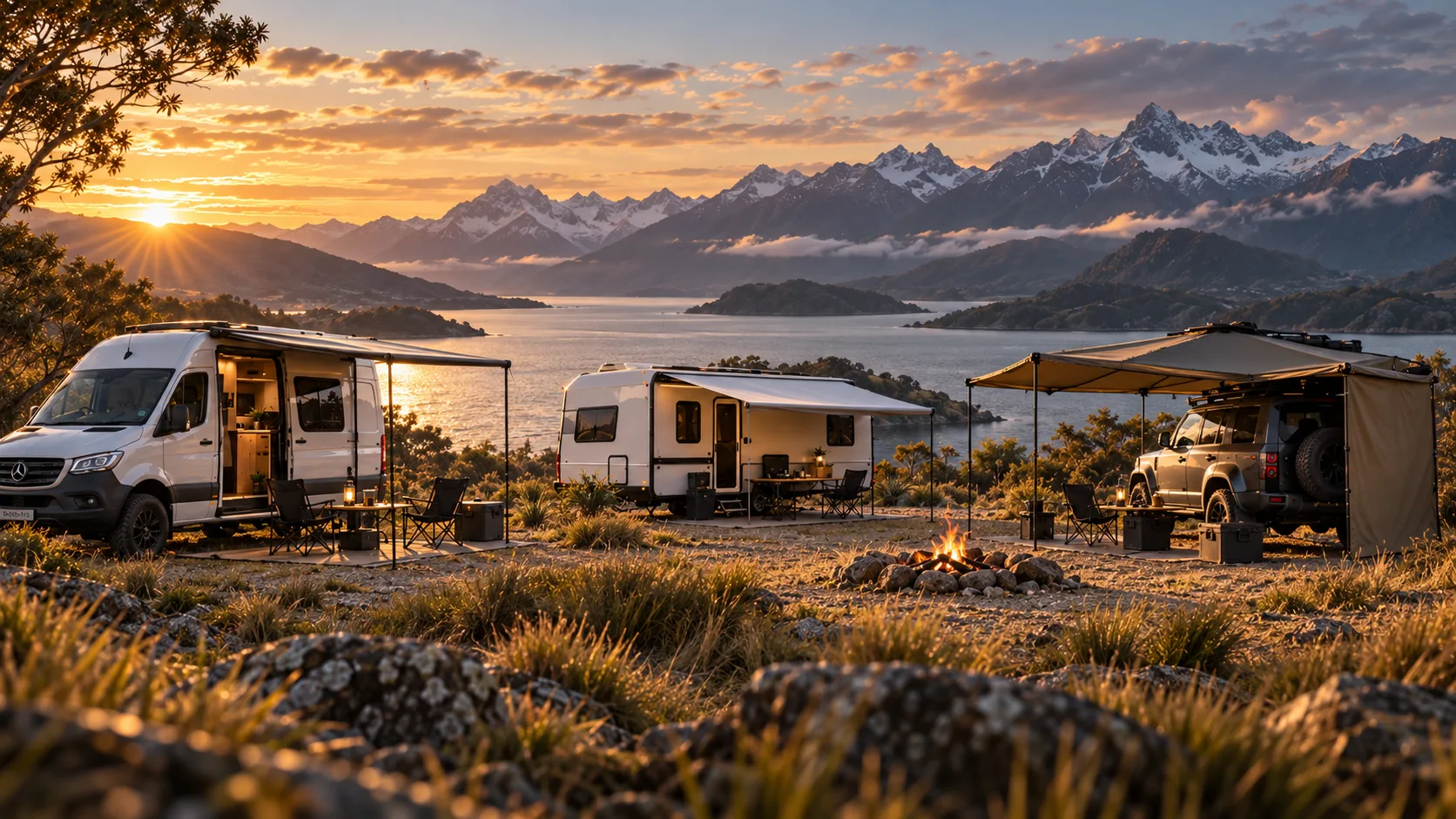
Campground owners may need a mixture of fixed communal canopies and portable equipment for guest vehicles. Vehicle-mounted awnings are not substitutes for engineered communal buildings. Separate the two use cases in the specification and budget.
02
Choose fixed cover for permanent communal activities
Communal tables, barbecue stations and outdoor kitchens need a defined roof and drainage strategy, safe cooking clearances, cleaning access and service routes. Compare fixed covers, opening louvre roofs and purpose-designed shade systems by the operating use, not by appearance alone.
Local design must address structural loads, wind and rain exposure, building consent where applicable, surface drainage and the interface with adjacent buildings. Apollo can supply suitable product systems; appointed designers and contractors remain responsible for site design, installation and approvals.
03
Recreation and sports areas have different priorities
Play spaces, compact sports courts and walking links require visibility, sightlines, surface performance, durability and access to maintenance equipment. Consider how shade affects supervision and whether a shade post creates an obstruction or impact hazard.
Where a park offers pickleball, basketball or other court activities, compare surface systems, containment, lighting, noise considerations and spectator facilities as a coordinated project instead of buying each element in isolation.
04
Coastal exposure and lifecycle costs
Salt spray, abrasive sand, UV and frequent cleaning can reduce the useful life of materials if they are specified only for sheltered inland sites. Record the distance from the coast, prevailing winds, expected use, likely cleaning methods and security needs.
Assess coatings, accessible fasteners, replacement fabric options, drainage and safe servicing alongside initial price. The lowest-priced component may be more expensive over its life if replacement work repeatedly disrupts guest facilities.
05
Build a clear RFQ for project supply
A useful holiday-park brief includes a marked-up site plan, photographs, quantities, intended uses, preliminary dimensions, local exposure, project stage, delivery destination and preferred installation programme. Separate the supply of products from foundations, local construction, electrical work and approvals.
Apollo NZ Global can review outdoor structures, architectural shade, selected recreation systems and touring products as separate packages or a coordinated supply enquiry. Exact product availability and technical documents are confirmed during quotation.
Essential site functions work without analytics. With your permission, Apollo measures which products and project pages are useful. Analytics stays off unless you allow it.