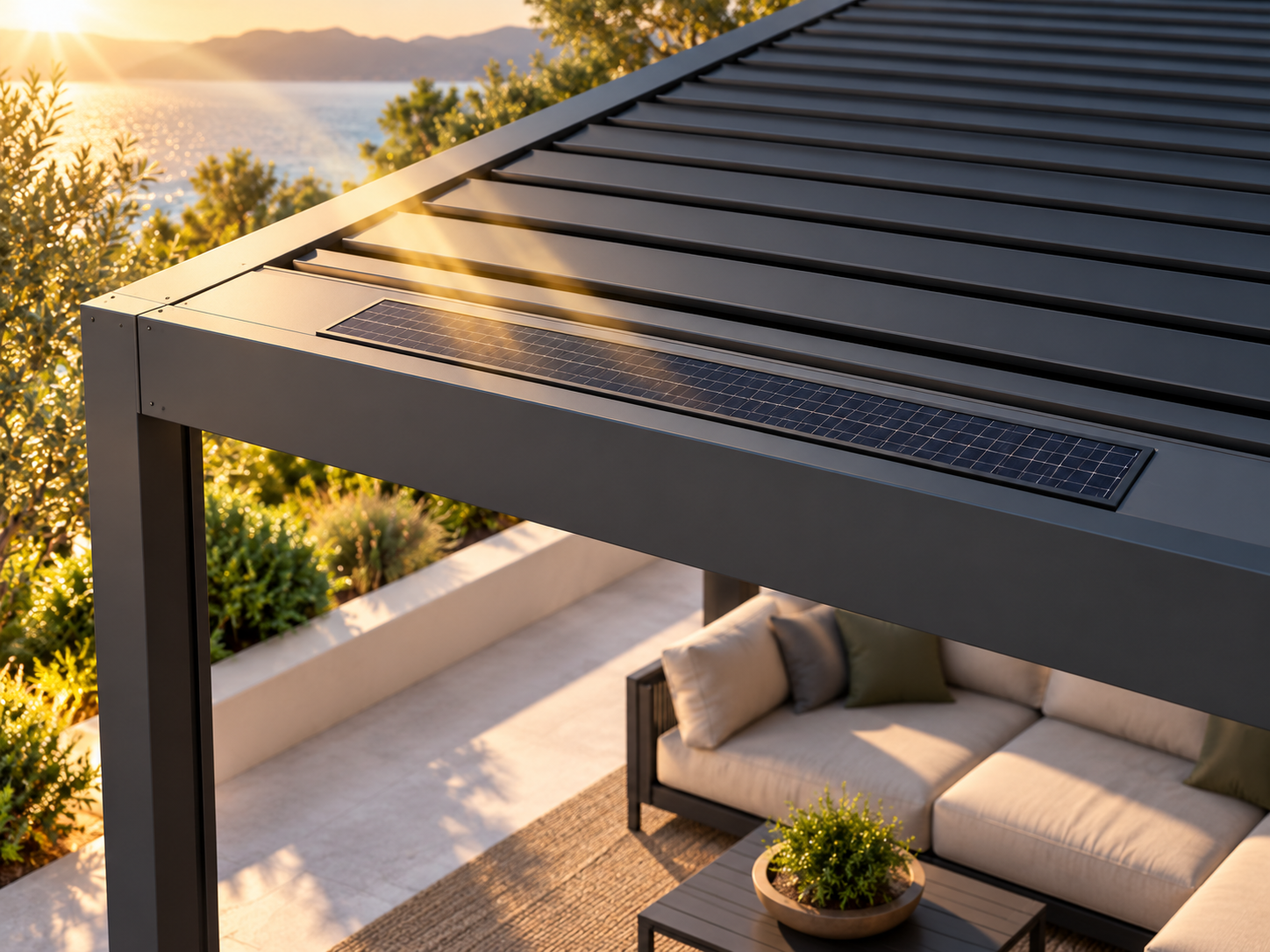
Solar Pergolas and Solar-Ready Outdoor Structures: Project Planning
A solar pergola combines two engineered systems that must work together: a structure that manages weather and loads, and electrical equipment that produces, stores or uses energy. A well-designed brief treats both as separate technical packages with clearly assigned responsibilities.
Planning guidance — final supplied configuration remains project-specific.
01
Define whether it is a solar-ready canopy or integrated solar system
A solar-ready structure may provide locations and service pathways for photovoltaic modules installed as a separate package. An integrated solar pergola includes a defined PV layout and may include batteries, inverter, lighting or powered roof operation. These scopes cannot be priced or approved as interchangeable solutions.
Start with the purpose: daytime shade, off-grid operation, site amenity, low-voltage lighting, grid-connected generation or a combination. Each changes how cables, controls and electrical protections must be planned.
02
Understand structural and weather interfaces
Solar modules introduce dead load, mounting hardware, potential uplift and maintenance access requirements. Structural design must address wind, seismic actions where relevant, corrosion environment, drainage, roof movement and any required access. A pergola designed without modules is not automatically suitable for retrofitting them.
Record the location, dimensions, orientation, supporting ground or slab conditions, building attachments and the jurisdiction's approval pathway. The project engineer and electrical designer should coordinate before any production drawings are finalised.
03
Calculate energy as a balance, not a headline number
Installed panel nameplate power is not the energy available to a load at every hour. Solar yield depends on sun angle, temperature, shading, orientation, season and electrical losses. Battery energy differs from usable discharge energy because reserve limits and system efficiency apply.
Build an equipment schedule with each light, motor, controller and socket load, power demand, expected hours, operating priority and required days of reserve. Determine whether the project can accept reduced function during poor weather or needs a mains charging strategy.
04
Specify electrical safety and local sign-off
Grid connection, inverters, storage batteries, cable routes, isolation, protective devices and earthing may trigger local electrical standards and utility approvals. New Zealand installation requirements must be reviewed by appropriately qualified professionals; equipment documentation alone is not an installation approval.
Apollo NZ Global operates on a supply-only basis. Suppliers can provide product-specific information for review, while design, construction, electrical installation, commissioning and compliance belong to the appointed project parties.
05
What to put in a solar pergola RFQ
Provide a dimensioned concept plan, photos, orientation, shade objective, wind or coastal conditions, intended daily loads, energy reserve, grid access, preferred controls, delivery destination and installation programme.
SOLVARN is Apollo's project-configured solar outdoor platform. Its published sizes and electrical figures are planning references, not a promise of power autonomy or a finished compliant design. Confirm the exact quoted configuration before using figures in tender documents.
Essential site functions work without analytics. With your permission, Apollo measures which products and project pages are useful. Analytics stays off unless you allow it.