Start with daily utility demand
The number of occupants, operating hours and intended use determine how much water, power and wastewater capacity the project needs. Those loads should be estimated before choosing off-grid equipment.

Modular & Global · Modular buildings
In remote projects, the building shell is often easier to supply than the services that make it usable. Power, water, wastewater and maintenance access should therefore be planned early.
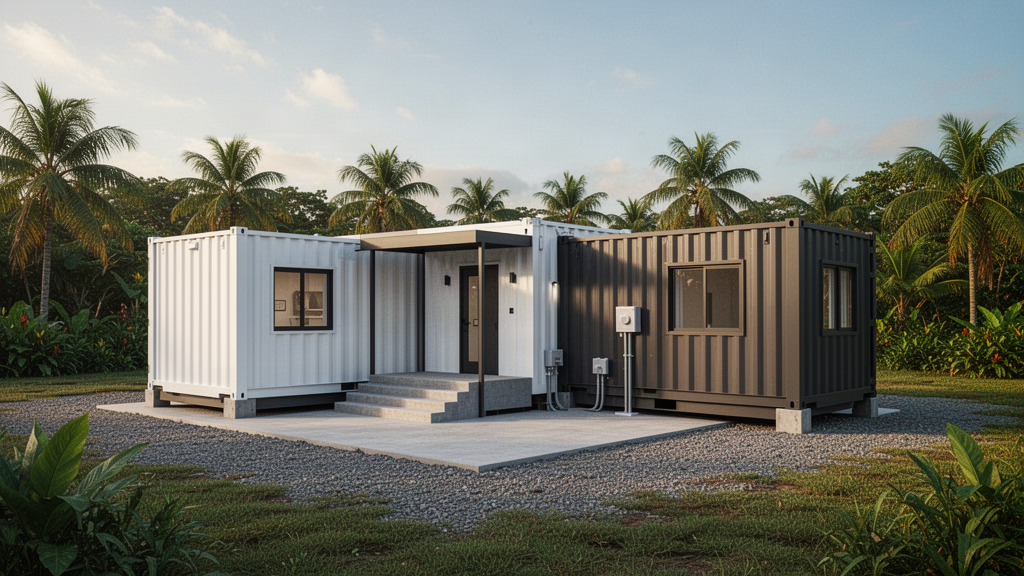
The number of occupants, operating hours and intended use determine how much water, power and wastewater capacity the project needs. Those loads should be estimated before choosing off-grid equipment.
Remote projects need simple maintenance pathways and realistic spare-parts strategies. Equipment that cannot be serviced locally can become a bigger risk than the building itself.
Water storage, backup power and communications redundancy may be more important where supply chains are slow or weather interruptions are common. The site should be designed around those realities.
The building, tanks, electrical equipment and other supporting systems may arrive on different freight paths. A clear delivery sequence helps avoid storing critical components in unsuitable conditions while the site is unfinished.
Move from article to project