Introduce the riding environment
Start with how the space works before teaching speed or technique.
- What direction does the track operate?
- Where do students wait before entering?
- Where do riders leave the track safely?
 Start Project Brief
RIDEspan · School Learning Centre
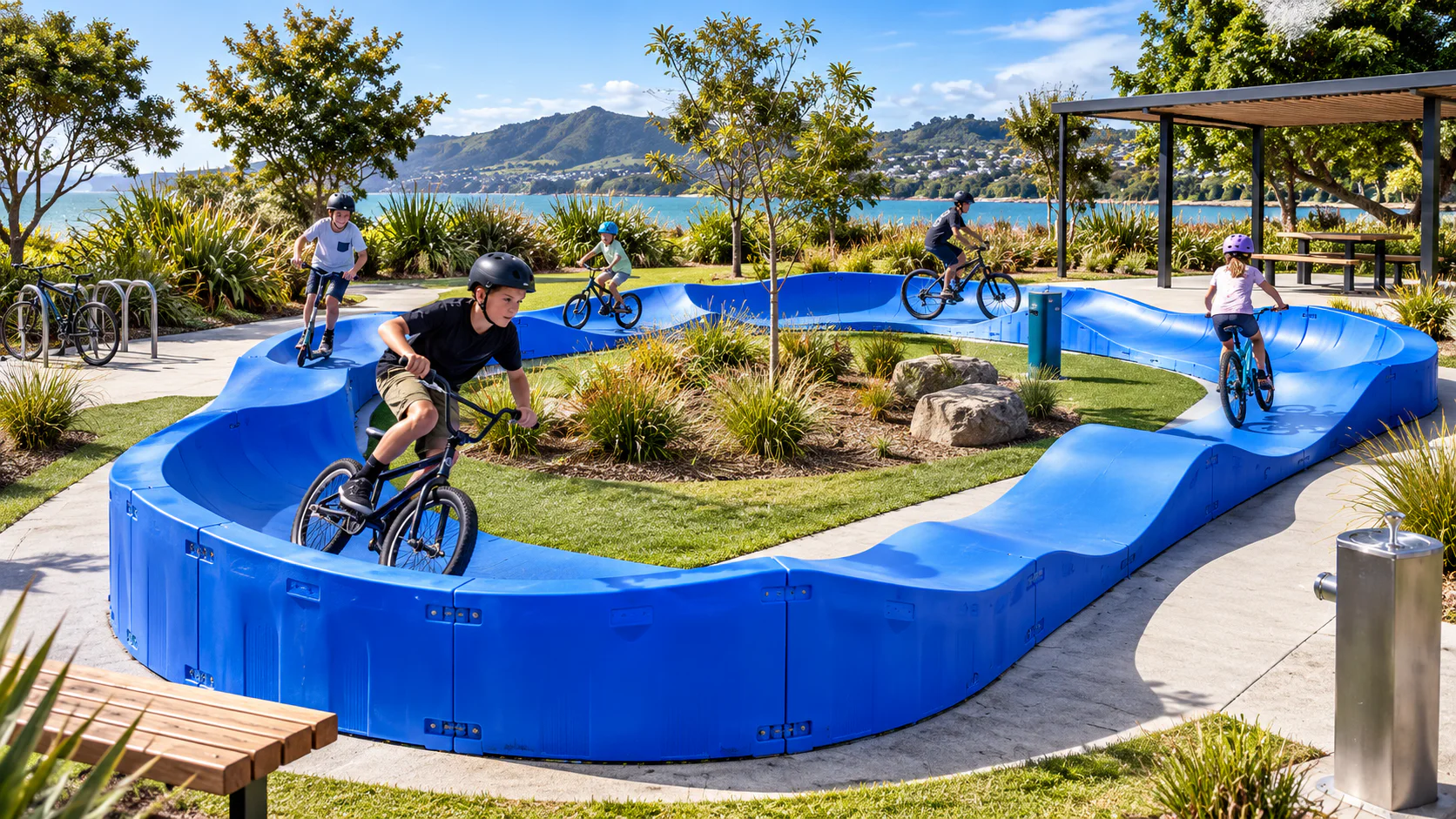
Use the track as both a recreation asset and a learning environment. This guide helps schools structure first-use teaching, rider etiquette, progression, supervision, curriculum activities and shared community use before the facility opens.
Learning modules
Start with how the space works before teaching speed or technique.
A simple equipment check can become part of every session.
Progression starts with balance, braking and line choice.
Help students understand how body movement creates momentum without relying on pedalling through the whole circuit.
The adult role should be designed around the facility rather than improvised after opening.
Class use, interval use and after-hours access may need different controls.
Working checklist
Use this as an early-stage discussion sheet. It does not replace local design, engineering, safety, accessibility or approval requirements.
Practical activities
Students can measure track envelope, perimeter, approximate travel distance and surrounding clear areas, then compare different layout options.
Compare how a modular system connects, changes and is maintained versus a permanently formed recreation surface.
Students record a skill they are practising—balance, braking, pumping or cornering—and reflect on control rather than maximum speed.
Run a simple student survey on preferred activities, confidence levels, times of use and barriers to participation.
Ask students to plan bike parking, seating, shade, hydration and safe movement around the track without blocking rider flow.
Record use at different times and compare age groups, activities and congestion points to inform operating changes.
Next step
Continue into site, drainage, rider flow, lifecycle and full facility planning.
Open Project toolSite Suitability CheckerScreen the school site before detailed layout selection.
Open PlanningPump Track PlannerMove from learning into footprint, riders and layout planning.
Open Product pathwayRIDEspan for SchoolsReturn to layouts, system information and the school project pathway.
OpenRIDEspan is supplied as a modular product system. Site preparation, civil works, drainage, installation, engineering, safety planning, accessibility, statutory approvals and operating procedures remain project-specific unless an exact quotation says otherwise.