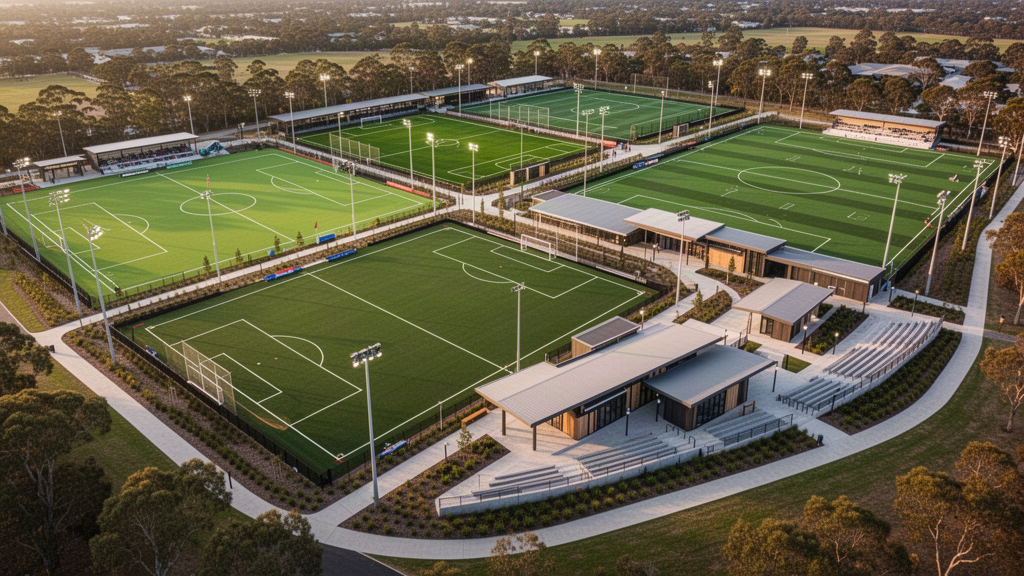
01Start with site levels and water movement
Survey the field footprint, surrounding grades, existing drainage and known ponding before deciding how the sports surface will interface with the civil works. Local rainfall and discharge constraints belong in the brief early.
Match the base to the exact field system
Different sports-turf constructions can have different substrate, flatness, permeability and shockpad requirements. The civil team should work from the current installation requirements for the exact selected system rather than a generic artificial-turf assumption.
Separate civil responsibility from surface supply
Apollo is supply-only. Earthworks, pavement design, drainage engineering, local geotechnical input and statutory approvals remain with the appointed project professionals unless explicitly included elsewhere.
Protect installation tolerances and access
Finished levels, compaction, smoothness, drainage outlets and access for rolls, adhesive, infill and maintenance equipment should be inspected before the surface installation begins.
Keep evidence in the project record
Retain base drawings, survey information, drainage details, installation requirements and any pre-installation acceptance record with the final system documents so later maintenance or replacement work has a reliable reference.