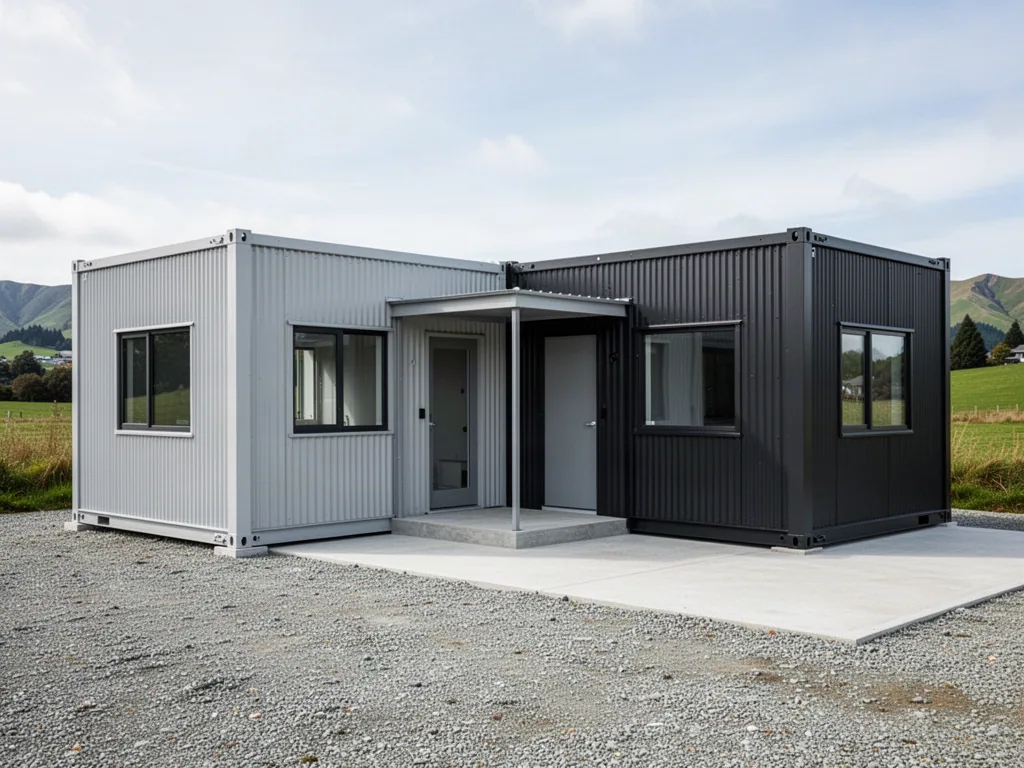
Development & Humanitarian Infrastructure · Free remote-health guide
Remote Clinic Infrastructure Planning Guide
A clinic is not simply an office with a treatment bed. Remote health facilities depend on reliable water, sanitation, hygiene, waste management, energy, ventilation, privacy, communications and maintenance. This guide helps project teams establish those interfaces before choosing a building system.
Planning guidance — final supplied configuration remains project-specific.
01
Start with the health-service model
Define what the facility will actually do: first aid, consultation, maternal or child health, vaccination, minor procedures, outreach, medicine storage or other services. Room requirements and services should follow the intended care model and the responsible health authority's requirements.
02
Treat WASH as core clinical infrastructure
WHO defines WASH in health care facilities broadly to include water, sanitation, hand hygiene, environmental cleaning and health-care waste services. These functions should be planned with the clinic rather than added after the building layout is fixed.
03
Map water, waste and cleaning routes
Identify safe water supply, handwashing, toilets, cleaning points, wastewater, health-care waste storage or handling and service access. Keep clean and dirty flows practical for the intended level of care.
04
Plan resilient power and environmental control
Lighting, refrigeration where required, communications, fans or HVAC, water pumping and selected clinical equipment may depend on reliable energy. Define essential loads and the local backup strategy with the operating team.
05
Design for maintenance and supply-chain reality
Remote clinics can be difficult to support after handover. Select maintainable fixtures and systems, provide spare parts and manuals, and identify which items can be serviced locally versus those that require specialist support.
What local health and accessibility requirements apply?
Waste
Defined health-care waste handling and storage pathway
Who manages waste after it leaves the clinic?
Energy
Essential loads, backup and equipment interfaces
What must remain operational during outages?
Maintenance
Service access, spares, manuals, local repair
Who owns long-term operation and maintenance?
Clinical planning, infection prevention, waste handling, WASH, accessibility, licensing and local health requirements remain the responsibility of the appropriate health professionals and authorities.
Continue planning
Related Development & Humanitarian Infrastructure resources
Direct comparison URLapollonzglobal.com/knowledge-centre/development-humanitarian-infrastructure/remote-clinic-infrastructure-planning-guide#comparison-matrix
Essential site functions work without analytics. With your permission, Apollo uses analytics to understand which products, guides and project pathways are useful. Analytics stays off until you allow it.