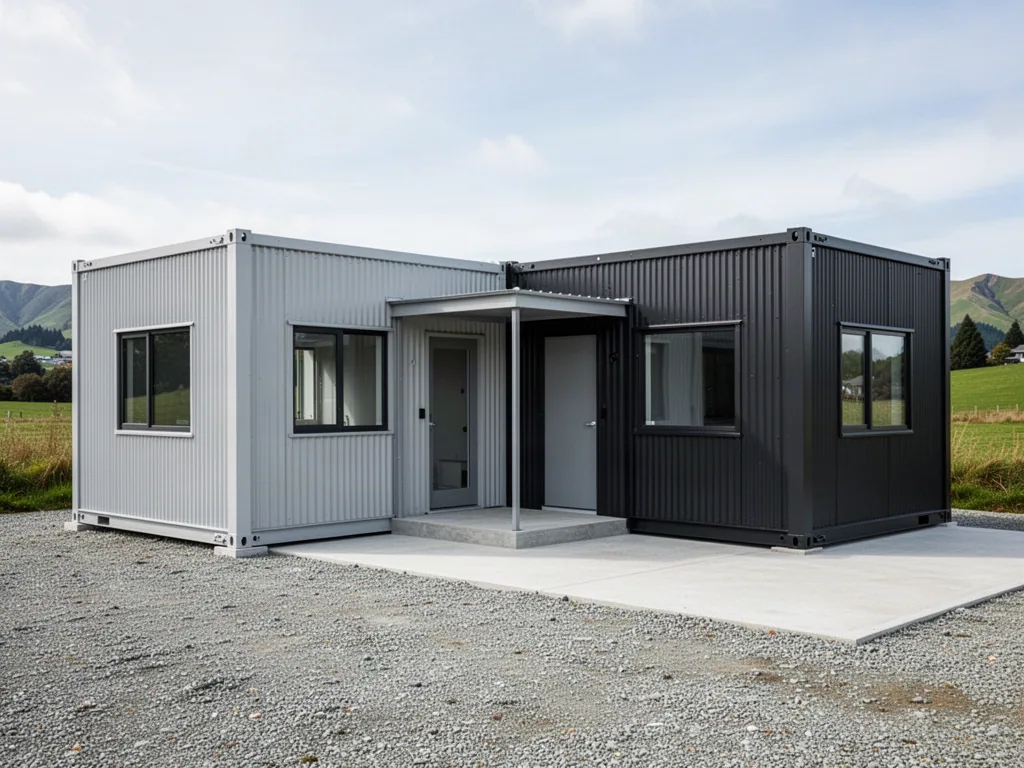
Reconstruction is not simply a faster version of normal construction. Sites may have damaged utilities, displaced communities, limited storage, constrained ports and urgent occupancy needs. This guide focuses on the transition from immediate response into durable, maintainable infrastructure.
Planning guidance — final supplied configuration remains project-specific.
01
Separate emergency shelter from reconstruction
Immediate life-safety shelter, transitional accommodation and permanent reconstruction have different design lives, standards, procurement routes and site requirements. Define which stage the project is addressing before selecting a building system.
A rapidly deployable product is not automatically appropriate as permanent housing, and a permanent building solution may be too slow for an immediate shelter requirement.
02
Prioritise essential community functions
Housing is only one part of recovery. Map sanitation, water, healthcare, education, administration, power, communications, access and community gathering needs so the reconstruction sequence restores essential functions rather than producing isolated buildings.
03
Build back for the known hazard
Where the disaster involved cyclone, hurricane, earthquake, flood or another recurring hazard, the reconstruction brief should explicitly address the relevant structural, envelope, drainage, anchoring, opening-protection and site requirements.
Do not describe a product as resilient merely because it is modular. Resilience must be supported by the actual design and project evidence.
04
Plan around damaged logistics
Ports, roads, bridges, cranes, storage yards, power and communications may be constrained after a disaster. Packaging, module size, shipment sequence, temporary storage and local assembly methods should reflect the actual recovery environment.
05
Design the handover from the beginning
Permanent recovery depends on local ownership, maintenance, spare parts, manuals, training, utility operation and a clear record of the finished building. Handover should be designed into procurement rather than treated as the final administrative step.
Comparison reference
Recovery-stage decision matrix
Planning criterion
Immediate response
Transitional infrastructure
Permanent reconstruction
Primary objective
Life safety and immediate basic needs
Restore essential services while longer-term work proceeds
Durable housing and community infrastructure
Typical emphasis
Speed, safe shelter, basic WASH
Repeatable facilities, relocatability where useful, service restoration
Design life, local standards, resilience, maintainability
Procurement question
Can it be deployed safely now?
Can it operate effectively for the intended transition period?
Can it be maintained, approved and used as long-term infrastructure?
Do not confuse with
Permanent housing without full review
A disposable temporary solution by default
Generic 'disaster-proof' marketing claims
The appropriate response stage and applicable humanitarian or reconstruction standards must be determined by the responsible programme and local authorities.
Continue planning
Related Development & Humanitarian Infrastructure resources
Direct comparison URLapollonzglobal.com/knowledge-centre/development-humanitarian-infrastructure/post-disaster-reconstruction-infrastructure-guide#comparison-matrix
Essential site functions work without analytics. With your permission, Apollo uses analytics to understand which products, guides and project pathways are useful. Analytics stays off until you allow it.