Façade screens + surfaces
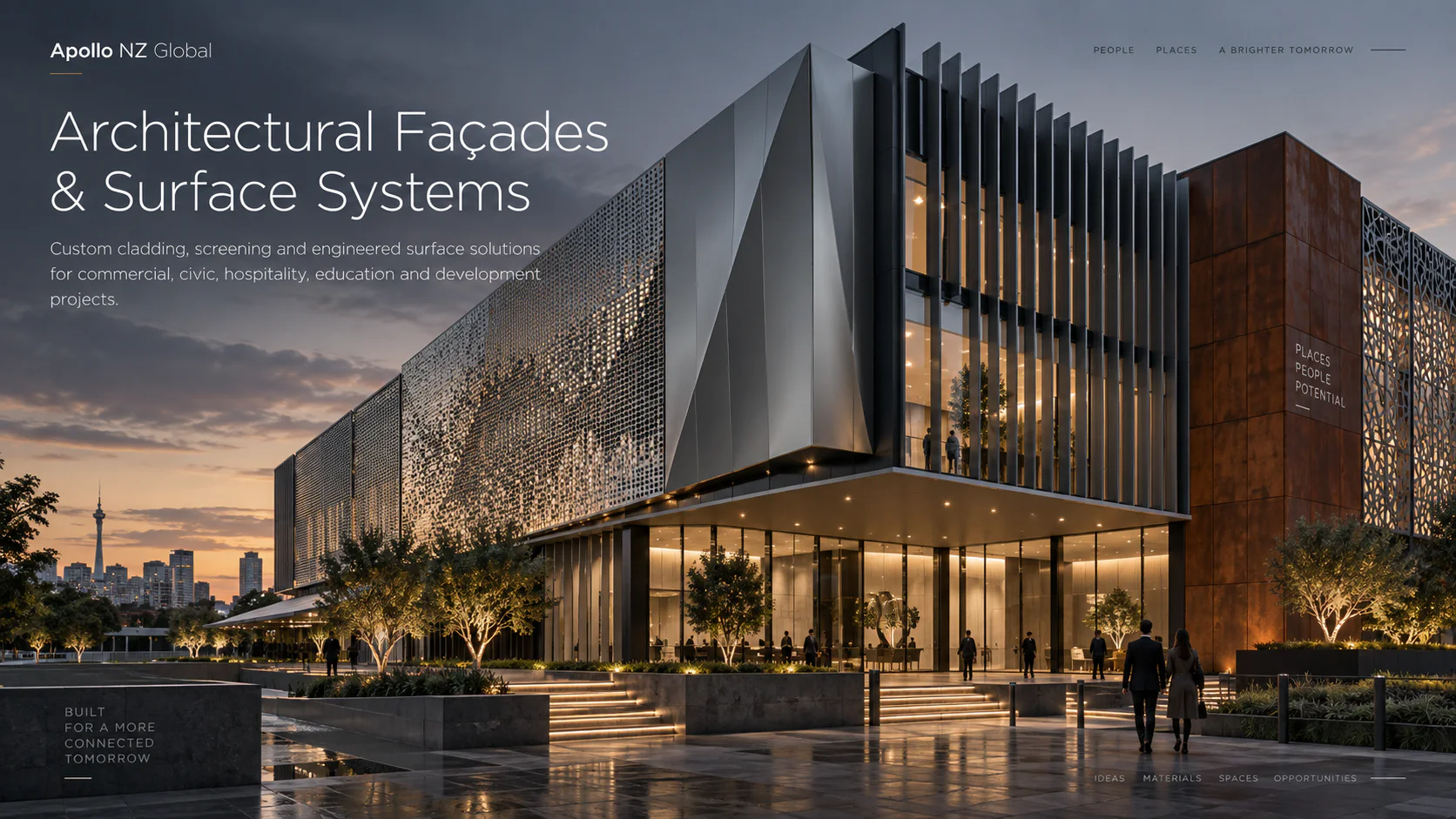
Perforated panels, fins, battens, cladding and custom surface systems can manage visual identity, screening and solar exposure.
 Singapore
 Singapore / Decision guide
These systems can appear beside each other on the same building but they solve different envelope and user-experience problems. Start with what the façade zone needs to screen, reveal, ventilate, open or protect.
Direct answer
Use architectural façade systems when the primary problem is cladding, screening, fins or surface expression; LYSVAR when transparent guard, enclosure or glass architecture leads; and TREVIK when the project needs a moving opening, canopy or closure system.
Project decision
These comparisons are designed to narrow the project route. They do not replace local engineering, authority review or exact-system technical evidence.
Perforated panels, fins, battens, cladding and custom surface systems can manage visual identity, screening and solar exposure.
Use when transparency, balustrade, partition, enclosure or architectural glazing is the central requirement.
Use when movement, access, transparent commercial closure, canopy or operable building-edge behaviour is required.
Comparison matrix
A project may combine all three systems in separate zones.
| Need | Façade systems | LYSVAR | TREVIK |
|---|---|---|---|
| Opaque / screened surface | Strong | No | Limited |
| Transparency | Limited | Core | Strong in selected systems |
| Operability | Usually fixed | Usually fixed | Core |
| Consultant interface | Façade / structural | Glass / safety | Opening / controls / structure |
Project brief
Frequently asked
No. The decision page is a shortlisting tool. Final suitability depends on the actual site, use, dimensions, exposure, selected system, available evidence and local project requirements.
Apollo is supply-led. Local engineering, approvals, foundations, services, installation and other site works remain with the appointed local project team unless a written project scope expressly includes something different.
No. Apollo uses a manual project-brief process so the selected system, quantities, destination, freight and project interfaces are reviewed before pricing.
Next step
Send the site, dimensions, use, quantities, exposure information and known local requirements. Apollo can then review the relevant systems, evidence, freight and supply scope.