Permanent steel building
For schools, halls, worship, industrial, commercial and institutional projects needing a conventional engineered building shell.
 Africa
 Africa / Decision guide
Across African projects, the best starting point can be driven as much by freight access, local erection capability, services and project life as by floor area. These three pathways solve different levels of permanence, span and site work.
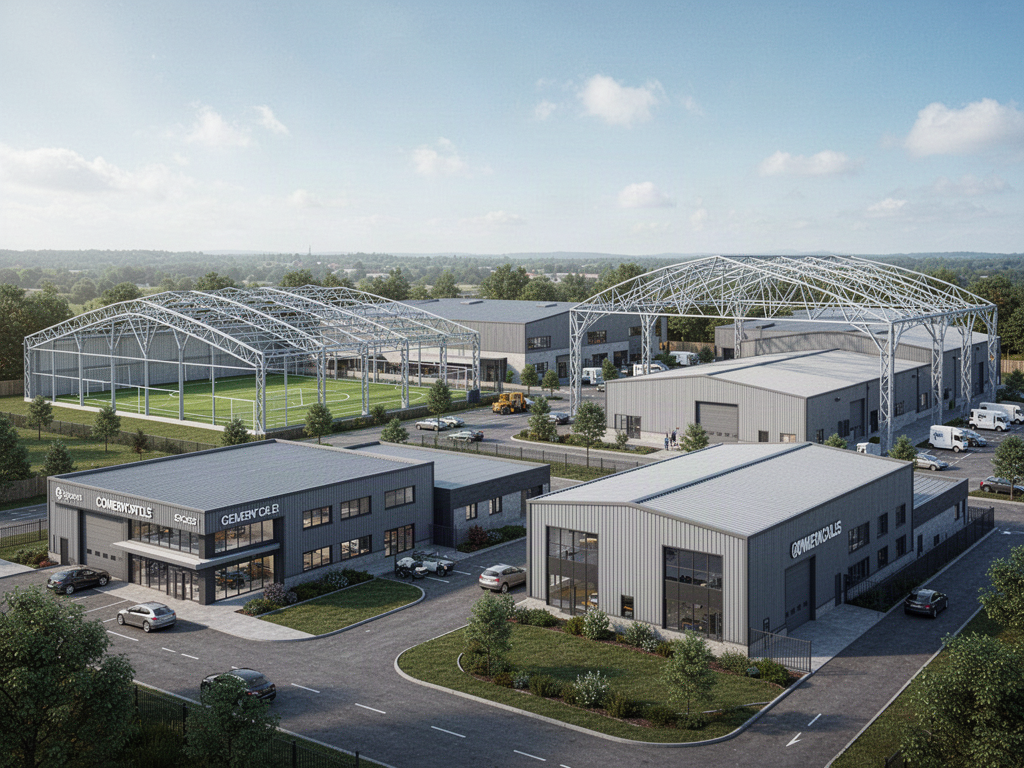
Direct answer
Use a permanent steel-building pathway where a conventional long-life shell and full building programme are required; SARENTA where a lighter clear-span hall or cover suits sport, worship, community or commercial use; and Montara where transport-efficient expandable modules better fit accommodation, office, classroom or rapid-deployment requirements.
Project decision
These comparisons are designed to narrow the project route. They do not replace local engineering, authority review or exact-system technical evidence.
For schools, halls, worship, industrial, commercial and institutional projects needing a conventional engineered building shell.
For sport, events, worship, community and selected commercial uses where large open space and a lighter structural pathway suit the brief.
For accommodation, offices, classrooms and project facilities where compact transport and faster deployment are important.
Comparison matrix
Country, climate, roads, port route, foundations, local labour and statutory requirements must be checked for the actual project.
| Factor | Steel building | SARENTA | Montara |
|---|---|---|---|
| Permanence | High | Project-specific | Modular / project-specific |
| Span strategy | Large by design | Clear-span strength | Module-based |
| Local erection | Significant | Required | Reduced / assembly-led |
| Freight | Container / break-bulk | Container / project | Container-efficient |
| Typical fit | Institutional / industrial / commercial | Hall / sport / worship / event | Accommodation / office / classroom |
Project brief
Frequently asked
No. The decision page is a shortlisting tool. Final suitability depends on the actual site, use, dimensions, exposure, selected system, available evidence and local project requirements.
Apollo is supply-led. Local engineering, approvals, foundations, services, installation and other site works remain with the appointed local project team unless a written project scope expressly includes something different.
No. Apollo uses a manual project-brief process so the selected system, quantities, destination, freight and project interfaces are reviewed before pricing.
Next step
Send the site, dimensions, use, quantities, exposure information and known local requirements. Apollo can then review the relevant systems, evidence, freight and supply scope.