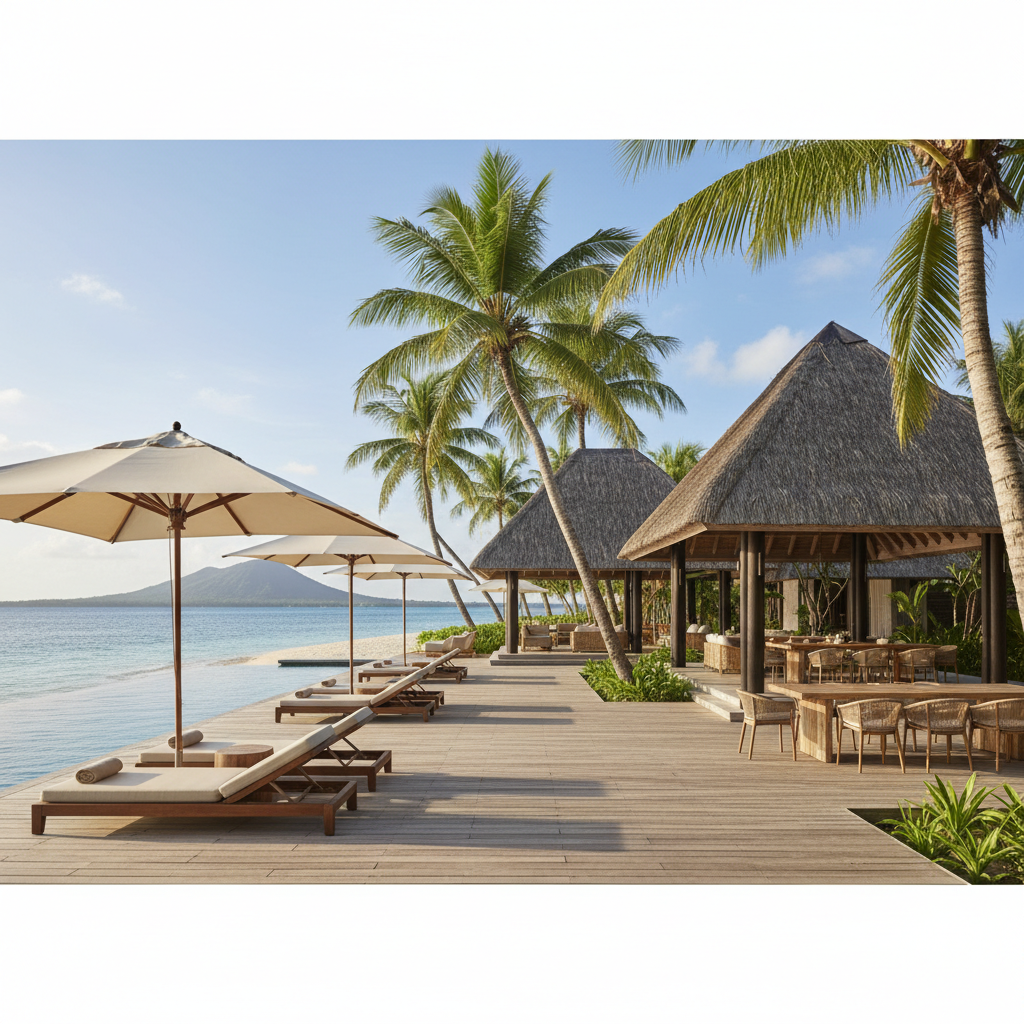
01Plan the complete guest journey
Guests move between villas, pools, beach bars, dining areas and activity spaces. A resort shade strategy works best when it connects those locations rather than treating each umbrella or shelter as a separate purchase.
Map sunny waiting points, family use, accessible routes, seating turnover and the spaces used most during afternoon rain.
Check where guests seek relief from the sun after check-in, at breakfast, during pool hours and while waiting for transport. Shade that looks generous at one time of day may miss the occupied area several hours later.
- Arrival and pool access shade priorities
Choose different systems for different zones
Poolside umbrellas, permanent dining canopies, adjustable louvre structures and guided outdoor blinds do not solve identical problems.
Use flexible shade where furniture moves, fixed rain protection where service must continue, and appropriately engineered architecture where the structure is part of the property identity.
A large permanent canopy can protect a popular shared dining zone while portable umbrellas may be better for changing poolside layouts. Keep the visual vocabulary consistent without assuming each zone needs identical structural equipment.
- Moveable shade versus permanent roof applications
Coastal conditions must drive product selection
Salt spray, high humidity, tropical rain and local wind exposure influence frame materials, protective finishes, fixings and maintenance.
Do not apply one blanket corrosion or wind claim to every Apollo range. Compare the verified specification of the chosen model against actual site conditions.
Where the project is cyclone-exposed, require locally applicable load criteria and model-specific engineering evidence. Terms such as tropical-ready or cyclone-proof should not replace a review of actual geometry, fixings and operating limitations.
- Site exposure and coating evidence
Water, drainage and the maintenance team
Concentrated rainwater, runoff over walking areas and blocked roof drains can undermine an otherwise premium outdoor space.
Plan fall directions, downpipe destinations and cleaning access. A beautiful terrace should remain maintainable without disrupting guest accommodation.
The pool deck and arrival areas deserve special attention to runoff. A roof outlet that directs water across wet guest pathways can make weather protection counterproductive. Maintenance teams also need safe access without closing extensive resort facilities.
- Water outlets and cleaning routes
Coordinating multiple resort packages
A project may include KAVORA shade, ARKEN architectural louvres, VELARIS screens and related outdoor systems. Each needs defined scope and technical evidence.
Set a common drawing reference, finish schedule, responsibilities matrix and packaging strategy so the supply packages arrive ready for the local project team to coordinate.
Combine the packages into a simple coordination matrix naming dimensions, reference drawings, design responsibility, selected finish, supplier documents, required services and local installer. This reduces contradictions between independently supplied items.
- Common finish and drawing schedule
- Installer and supplier interface matrix
Freight and island-site readiness
Measure cargo access, depot or port requirements, unloading equipment, storage conditions and the sequence in which the local contractor needs each package.
Apollo provides supply-only project coordination. Local contractors, engineers and authorities handle installation, site works and destination compliance.
Receiving overseas crates at a resort is not the same as placing them in their final position. Confirm port or depot collection, local transport clearances, available lifting equipment and the sequence of work around guest operations.
- Port, depot and crane access
The first resort shade brief
Provide site plans, photos, resort zone priorities, approximate structures, guest operating patterns, destination, and the stage of design.
This is enough to select a viable direction before investing time in detailed model selection.
A useful first-stage package plan identifies which areas are urgent and which can follow as later phases, protecting infrastructure corridors and maintaining a coherent appearance across the destination.
- Priority zones and stage timings