Know where the water goes
Open tiles allow water through the playing layer, while roll-out surfaces move water across the top. In both cases, the project still needs a clear path from rainfall to a drain, edge or suitable discharge point.

Sports & Recreation · Sports flooring
Outdoor court drainage is often discussed as if the surface alone determines whether a court dries quickly. In reality, the surface, substrate, falls, outlets and surrounding site all form one drainage system.
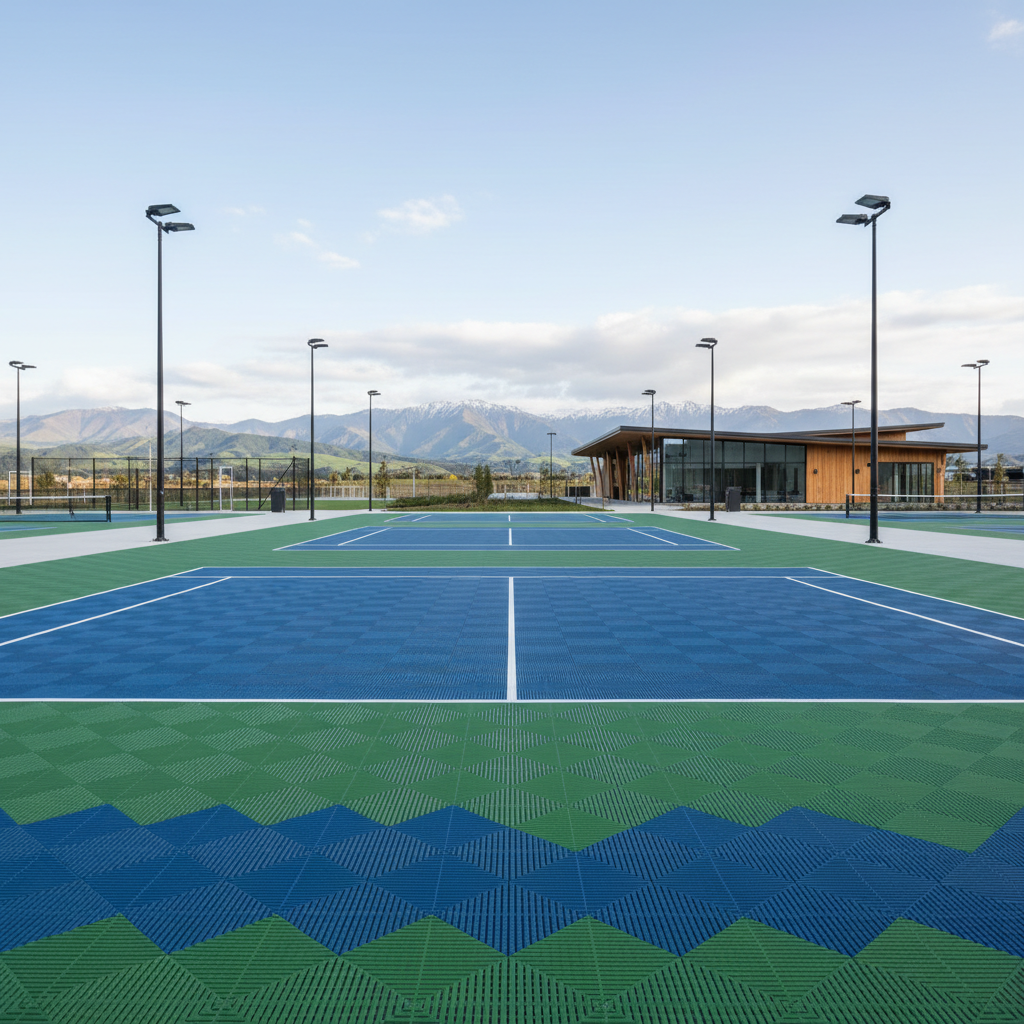
Open tiles allow water through the playing layer, while roll-out surfaces move water across the top. In both cases, the project still needs a clear path from rainfall to a drain, edge or suitable discharge point.
Ponding on an existing court is valuable information. It shows where base levels or outlets may need attention before a new surface is added. Covering the issue rarely removes it.
Water often collects at fences, retaining edges, thresholds and perimeter channels. These interfaces should be coordinated with the flooring thickness and finished level rather than treated as an afterthought.
Leaves, sediment and debris can reduce drainage performance over time. A maintainable drainage layout and routine cleaning plan are part of the surface system, especially at schools and community facilities.
Move from article to project