How to Choose a Sports Floor Without Starting With Thickness
The most useful sports-flooring question is rarely 'what is the thickest surface?' It is whether the surface, base, drainage and operating model work together for the people who will actually use the facility.
Apollo NZ Global EditorialPublished 2026-09-08Practical project guide
Planning guidance — final product and site requirements are confirmed per project.
01
Start with the base
A premium surface cannot repair settlement, active cracking, poor levels or ponding underneath it. Existing concrete or asphalt should be reviewed first so surface choice does not hide a civil problem that will reappear later.
Check falls and drainage
Identify active cracks or movement
Confirm the surface is stable, clean and suitable for the intended system
02
Understand the drainage model
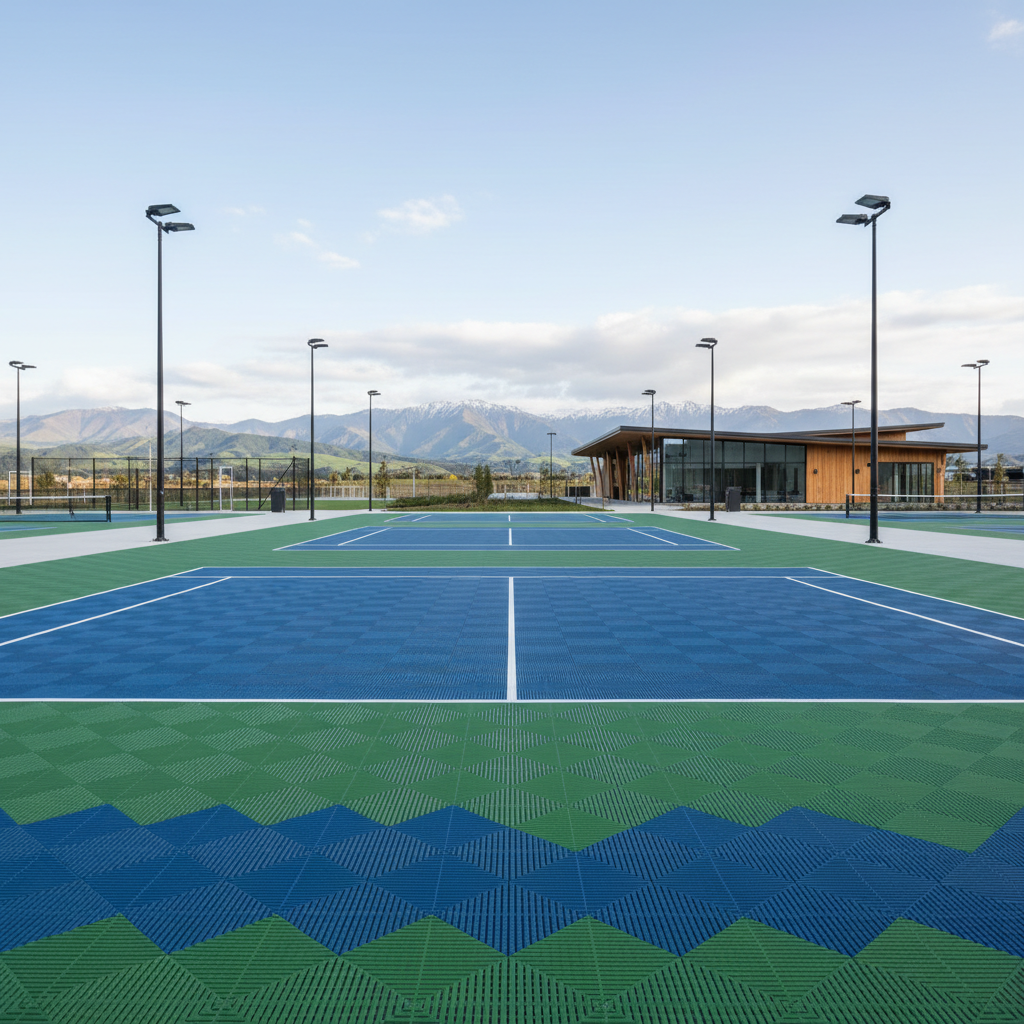
Open modular tiles allow water to pass through the playing surface, but the water still needs somewhere to go below. Continuous roll-out flooring does not drain through in the same way, so base falls, perimeter drainage and seam strategy become more important.
03
Match the sport and user group
Pickleball, basketball, school multi-sport and indoor hall use can all value different combinations of rebound, traction, comfort, replaceability and visual finish. A club conversion may also need a staged solution that can expand as participation grows.
04
Plan maintenance before installation
Spare tiles, repair materials, storage cores for portable rolls, approved tapes or adhesives and a cleaning plan should be considered when the system is purchased, not months after handover.