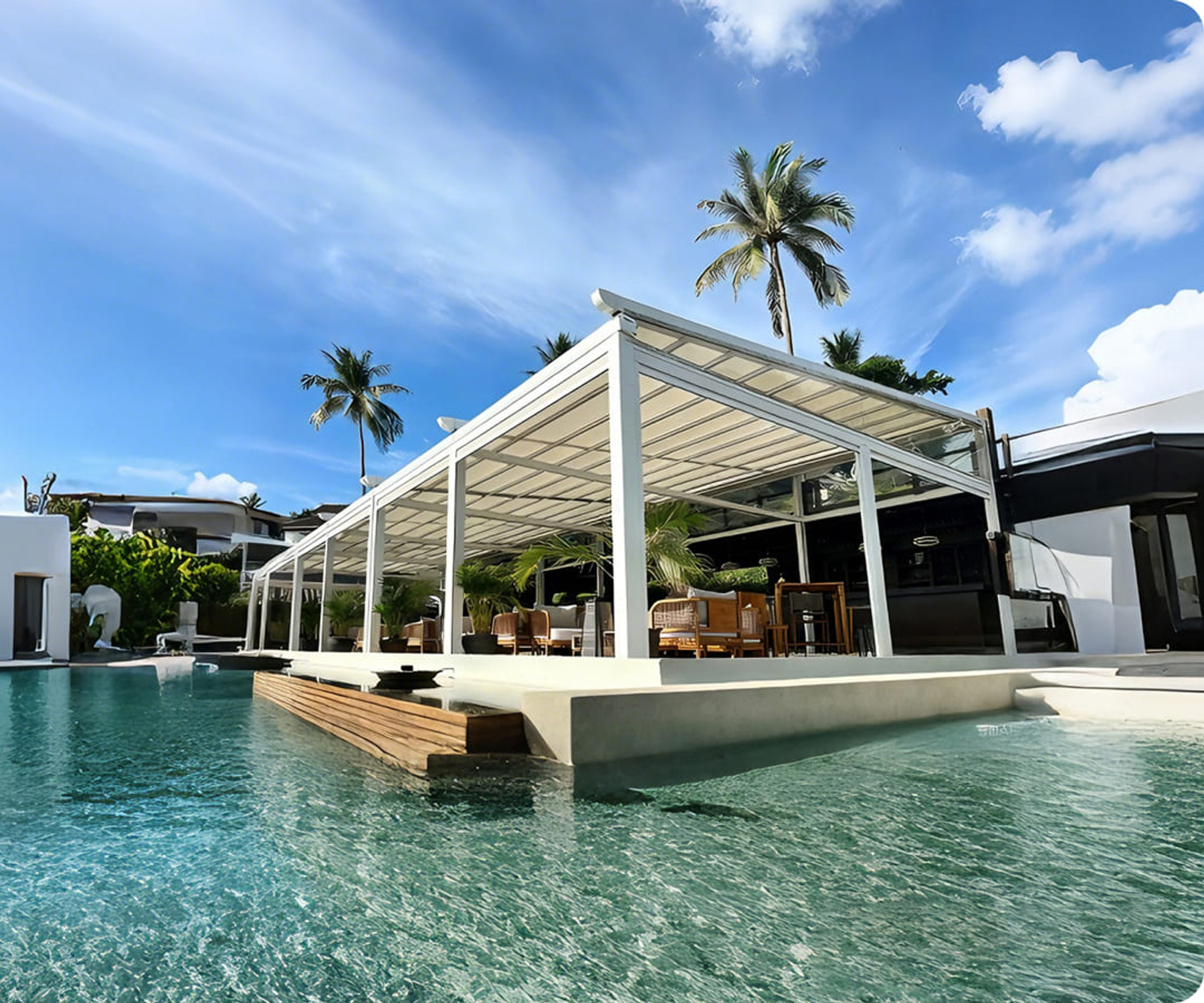
01Choose FIXED when permanent cover is the objective
FASGAR FIXED suits terraces and outdoor spaces where dependable overhead shelter matters more than changing roof openness. The project still needs a deliberate drainage route, structural support and local review of the building or foundation interfaces.
A fixed roof is not automatically simpler at the site: wall junctions, gutters, columns, falls and services still need to be coordinated.
Choose RETRACT when open-sky operation matters
FASGAR RETRACT uses a motorised flexible roof membrane that extends for shelter and retracts into a defined stack or travel zone. It is particularly relevant where restaurants, resorts and terraces benefit from changing the roof through the day.
Controls, power, membrane movement, drainage, access for maintenance and the operating procedure during strong weather should all be part of the brief.
Keep FASGAR distinct from louvre systems
FASGAR is the non-louvred roof family. Projects requiring adjustable aluminium blades should be reviewed under CADARN for modular kitset louvre pergolas or ARKEN for bespoke architectural louvre roofs.
Keeping these territories separate makes product selection clearer and avoids forcing a fixed or membrane-roof brief into a louvre solution.
Hospitality projects should be planned around operations
For restaurants, hotels and resorts, map seating zones, opening hours, weather response, staff operation, drainage, lighting and maintenance access before deciding where fixed and retractable roof zones should sit.
Mixed projects can use permanent cover in service-critical areas and retractable cover where outdoor atmosphere and open-sky use have greater value.
Confirm the final technical package against the selected system
Final dimensions, membrane or aluminium construction, structural layout, controls, exposure limits, drainage, freight and destination compliance are project-specific. Apollo prepares manual quotations after the project pathway is reviewed.