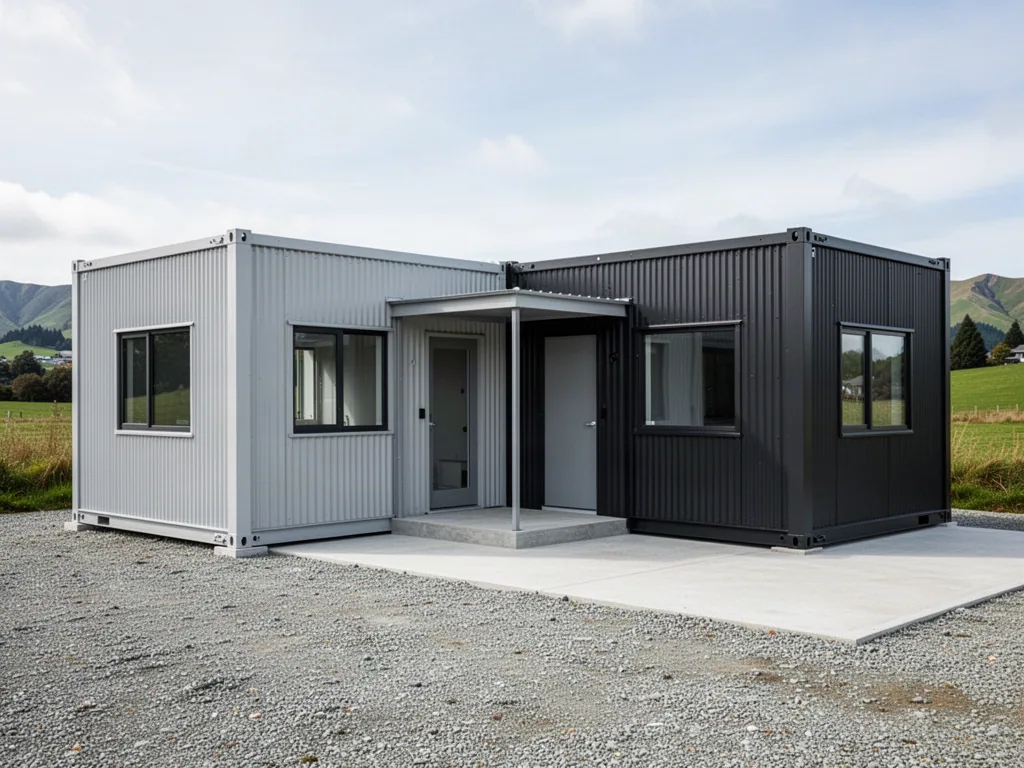
Development & Humanitarian Infrastructure · Free school-recovery guide
Rebuilding Schools After a Disaster
Restoring education after a disaster is not just a classroom-building exercise. Safe access, sanitation, staff space, learning continuity, site hazards, utilities, furniture, storage and future resilience all influence the recovery plan. This guide helps separate immediate learning continuity from longer-term reconstruction.
Planning guidance — final supplied configuration remains project-specific.
01
Separate temporary learning continuity from permanent reconstruction
Temporary learning spaces can restore access quickly while damaged schools are assessed or rebuilt. Permanent reconstruction needs a longer-term brief covering site safety, design life, local standards, accessibility, sanitation, utilities, resilience and maintenance.
UNESCO's education-in-emergencies resources distinguish immediate continuity needs from the broader task of restoring and rehabilitating educational facilities.
02
Assess the site before repeating the old layout
Review the hazard that caused the loss, site access, drainage, flood exposure, wind or seismic criteria, utility condition and safe movement. Rebuilding the same arrangement in the same vulnerable location without review can reproduce the original risk.
03
Plan the whole school function
Classrooms need staff and administration space, toilets and handwashing, storage, secure circulation, shaded waiting or gathering, recreation and often food or community-service interfaces. Restore the operating system, not only teaching rooms.
04
Keep children and staff movement central
Entries, exits, safe paths, accessible routes, drop-off areas, emergency access and separation from construction activity should be mapped early. School safety guidance also places emphasis on resilient facilities and disaster management, not structure alone.
05
Design the recovery in phases
A programme may begin with a smaller safe learning facility, then add permanent classrooms, staff areas, amenities and recreation as site works and funding progress. Preserve utility and circulation capacity for later phases.
Comparison reference
School recovery planning sequence
Planning criterion
Immediate continuity
Transitional campus
Permanent reconstruction
Learning space
Safe temporary rooms / alternative spaces
Repeatable classrooms with essential services
Durable classrooms designed for long-term use
WASH
Safe basic toilets and handwashing
Reliable school sanitation and cleaning
Long-term compliant WASH and maintenance
Site
Safe accessible area
Known temporary / transitional layout
Hazard-informed permanent masterplan
Staff + administration
Minimum operational base
Dedicated staff / records functions
Integrated administration and support spaces
Resilience
Avoid immediate known hazards
Improve practical protection
Use destination-specific resilient design and local standards
Education recovery should follow the responsible education authority, local law, current safety standards and programme-specific requirements. Temporary learning needs do not remove the need for safe facilities.
Continue planning
Related Development & Humanitarian Infrastructure resources
Direct comparison URLapollonzglobal.com/knowledge-centre/development-humanitarian-infrastructure/rebuilding-schools-after-disaster-guide#comparison-matrix
Essential site functions work without analytics. With your permission, Apollo uses analytics to understand which products, guides and project pathways are useful. Analytics stays off until you allow it.