Confirm the usable footprint
The marked playing rectangle is only the starting point. Practical club and community projects need space around the court for player movement, circulation, fencing, seating and safe access.

Pickleball · practical guide
Converting an existing tennis, hardstand or multi-use area to pickleball can be fast compared with building from scratch, but the success of the conversion still depends on the base, available run-off and how the space will operate day to day.
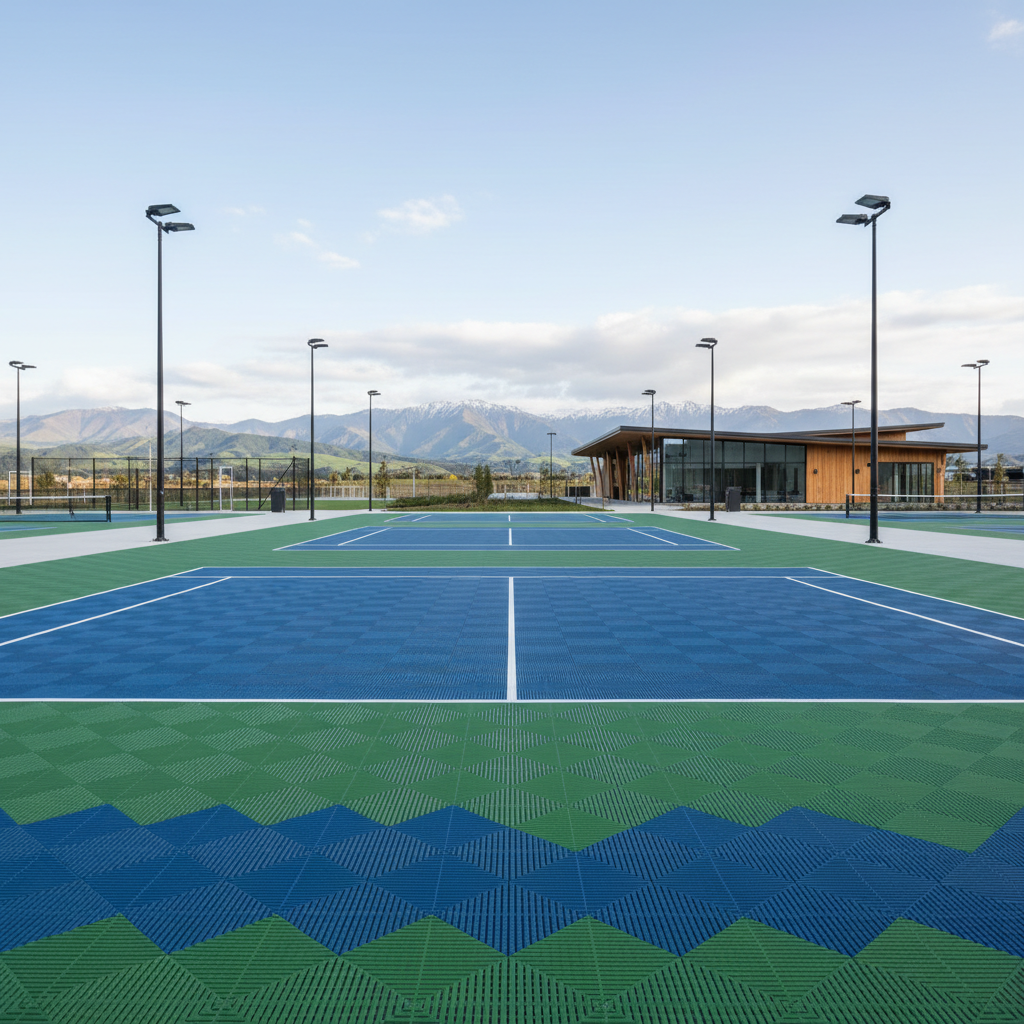
The marked playing rectangle is only the starting point. Practical club and community projects need space around the court for player movement, circulation, fencing, seating and safe access.
Natural grass and unsuitable soft surfaces are not a direct base for Apollo tile or roll-out systems. Existing hard courts should be checked for cracks, ponding, contamination and levels before the new playing surface is chosen.
Modular tile can suit projects valuing drainage, replaceability and modular installation. Continuous roll-out surfaces can offer a more seamless court feel. The right choice depends on base, climate, user preferences, maintenance and whether the conversion is permanent or staged.
Clubs often get more value by planning lighting, nets, camera technology, storage and spectator areas as a staged roadmap rather than trying to fund every upgrade on day one.
Move from guide to project