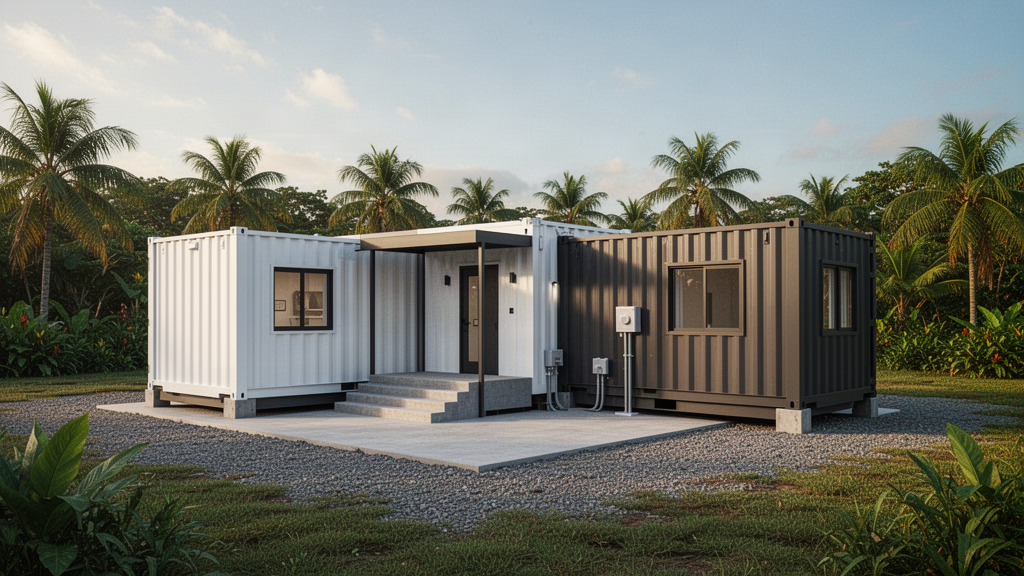
Expandable Container Houses: Where They Make Sense and Where They Don’t
Expandable buildings are useful because one modular platform can support many project types, but the intended use should drive the design, services and compliance pathway from the beginning.
Planning guidance — final product and site requirements are confirmed per project.
01
Housing and accommodation
Expandable modules can suit staff accommodation, guest units, holiday accommodation and selected residential pathways where the local building, sanitation and occupancy requirements are understood. The shell format does not remove the need to design for the actual occupants.
02
Work, education and community uses
Offices, classrooms, training rooms and community facilities can also use modular buildings effectively. Circulation, accessibility, ventilation, services and supervision requirements vary by use and should be reflected in the brief.
03
Health and service buildings
Clinics, sanitation units and utility spaces can be considered where the correct project-specific configuration is developed. These uses should never be assumed to be compliant simply because the building is modular.
04
Know when modularity is not the whole answer
Sites with difficult access, heavy local engineering, complex planning controls or unusually specialised room requirements may need more local work than expected. The value of modular construction is strongest when the transport and site interfaces are planned realistically.