
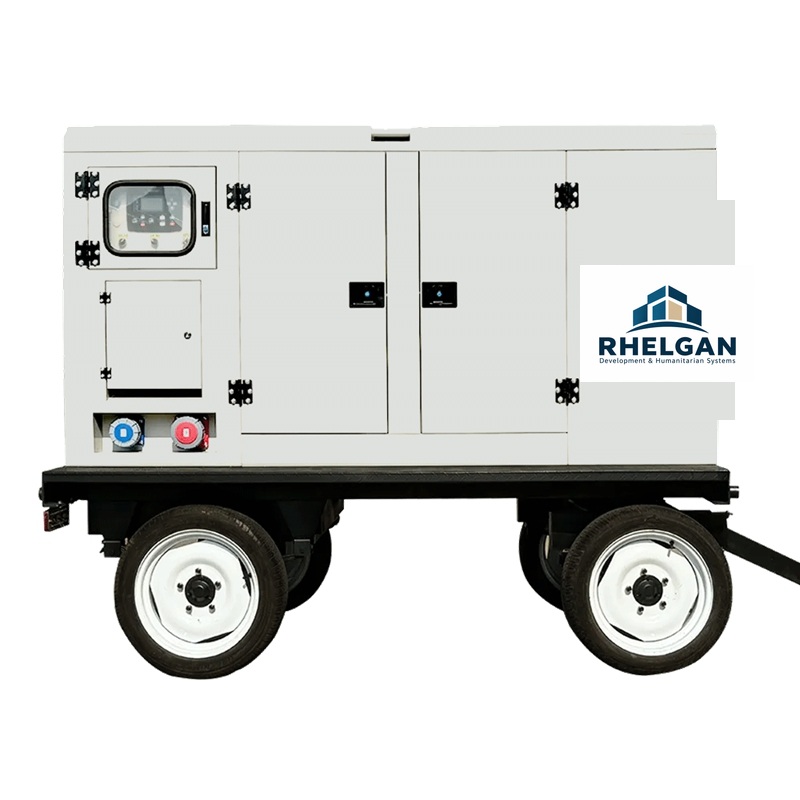
Mobile trailer generators for changing response locations
RHELGAN Power & Energy Systems
Relief · Recovery · Reconstruction
Disaster-Recovery Power Systems
Mobile, silent and containerised generator systems for restoration of essential services, temporary facilities and the transition from immediate response into durable recovery infrastructure.
Planning classes to review
Start with a range, then size from the real load.
POWER 30POWER 60POWER 150Mobile / containerised larger systems
Load definition
Identify what must keep running.
Emergency clinics + first aid
Temporary water and sanitation
Communications + coordination
Temporary accommodation + community facilities
Site lighting and recovery operations
Pumps and restoration equipment
Power architecture
Choose the operating system around the generator.
Silent packages for occupied relief and community sites
Containerised systems for longer-duration recovery compounds
ATS where restored grid supply remains unstable
Standardised spare-parts and service kits for multi-site programmes
Project inputs
What we need before the final configuration is locked.
Immediate versus recovery-phase duty
Transport route and deployment equipment
Critical-load priorities
Expected operating hours per day
Fuel availability and storage
Local service capability and spare-parts strategy
Project specification control
Disaster-response requirements can change rapidly. Transportability, fuel, connection method, earthing, safe siting and local operating capability should be planned with the same care as generator capacity.
RHELGAN POWER class names are planning references. Final generator rating, engine, alternator, emissions, controller, ATS, enclosure, cooling, fuel arrangement, certifications and local electrical compliance are confirmed for the exact project and destination.
RHELGAN · POWER & ENERGY SYSTEMS