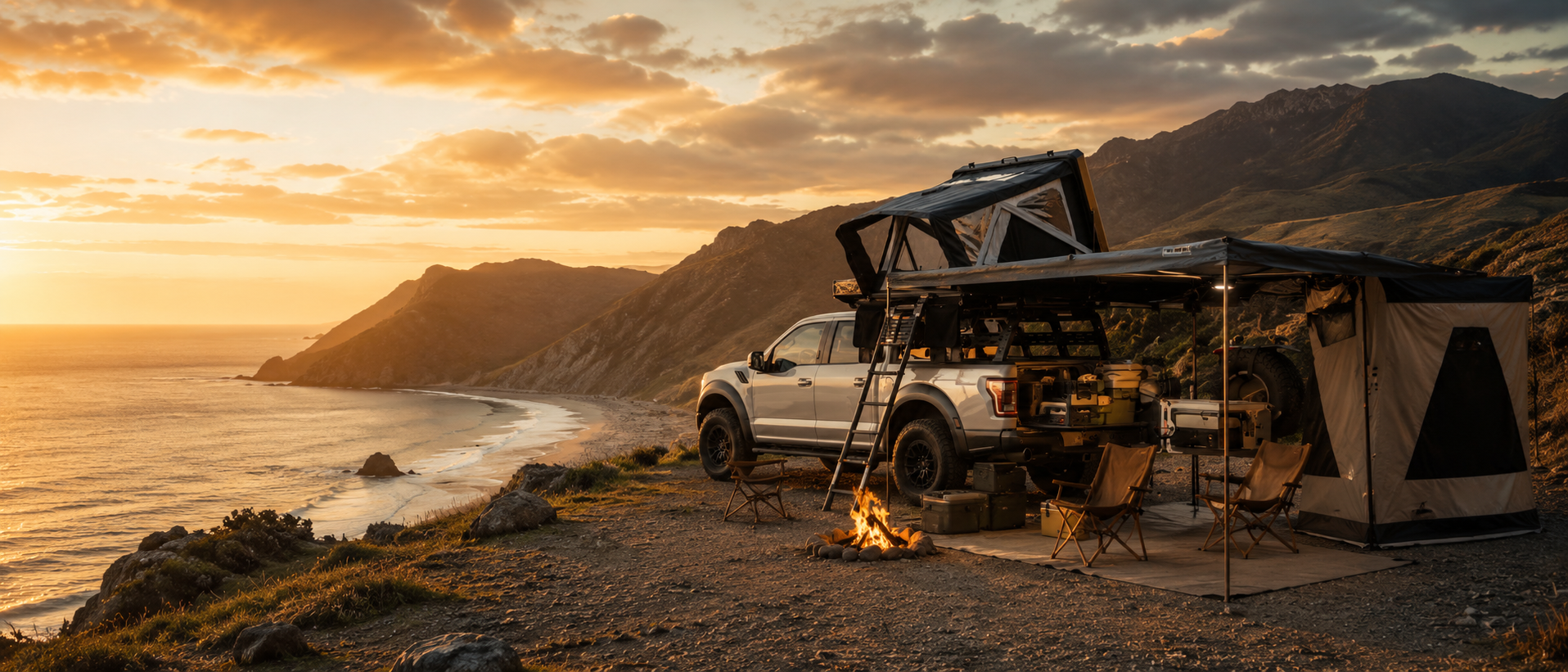
Rooftop Tent and Awning Packages: Build the Shelter Around the Way You Camp
A rooftop tent and awning work best as one camp system rather than two unrelated accessories. The sleeping setup, cooking zone, vehicle doors and weather direction should all make sense together when camp is deployed.
Apollo NZ Global EditorialPublished 2026-09-08Practical project guide
Planning guidance — final product and site requirements are confirmed per project.
01
Choose the tent around travel rhythm
Frequent overnight moves usually place more value on fast opening and pack-down, while longer base camps can justify a larger sleeping or living footprint. The tent choice establishes the rhythm for the rest of the shelter system.
02
Use the awning to support how people move
A straight side awning can create a quick sheltered zone beside the vehicle, while a 270-degree format can cover a larger side-and-rear area. Doors, tailgates and tent ladders should remain usable when the awning is deployed.
03
Count the combined weight
Tent, awning, rack, room panels and accessories all contribute to the carried load. Vehicle and rack limits should be reviewed for the complete setup rather than one product at a time.
04
Test the package before a remote trip
A local overnight trip quickly shows whether the ladder, doors, cooking zone and shelter arrangement work together. It is easier to adjust a camp system close to home than after several days on the road.