Put daily-use items closest to hand
Water, basic cooking gear, lighting and frequently used personal items should be reachable without dismantling the whole vehicle. Good access reduces setup time more effectively than adding extra compartments.

Adventure · Adventure
Vehicle-camping storage often becomes complicated because every spare space gets filled. A better approach is to decide what must be reached every day, what is only used at camp and what is genuinely emergency equipment before adding more racks or boxes.
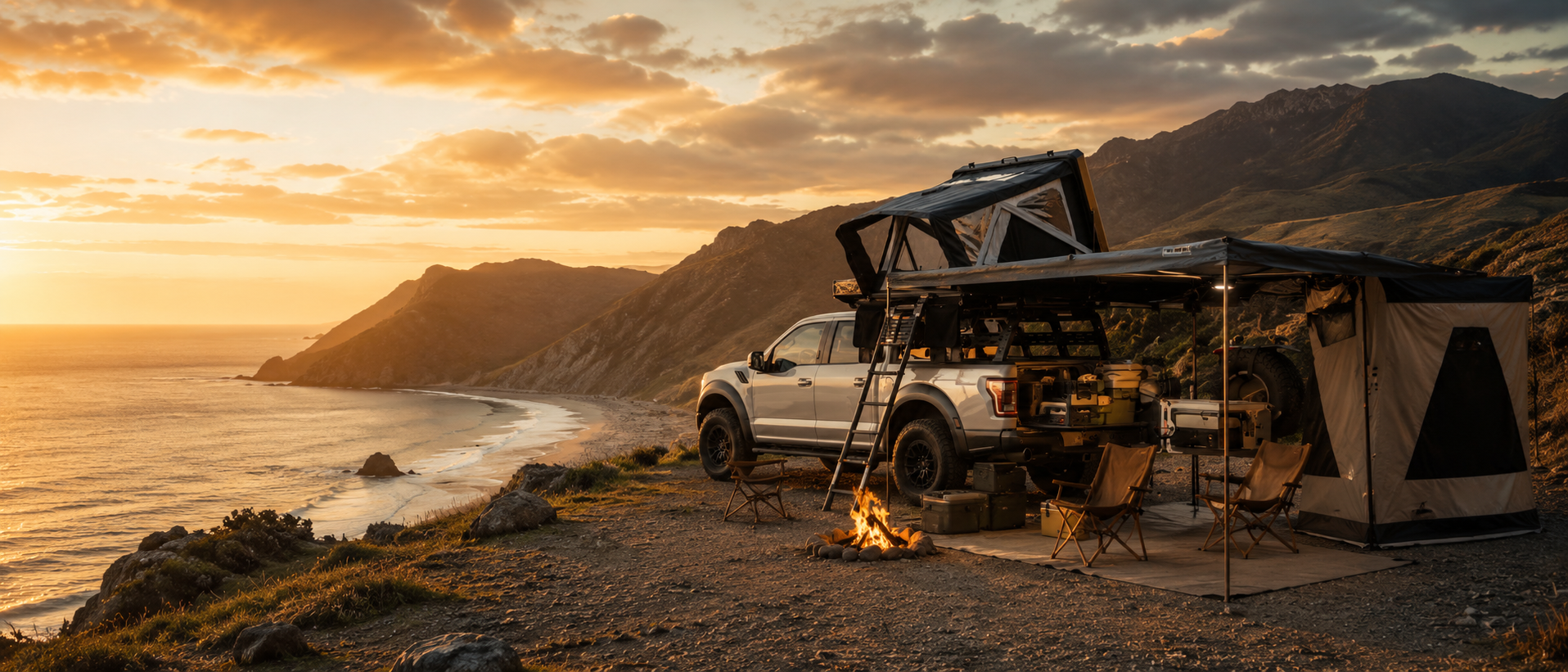
Water, basic cooking gear, lighting and frequently used personal items should be reachable without dismantling the whole vehicle. Good access reduces setup time more effectively than adding extra compartments.
Items used only after camp is established can sit deeper in the storage system than recovery, safety or roadside equipment. The packing order should reflect when an item is needed, not simply its size.
Water, tools and dense equipment add significant weight. Their placement should respect the vehicle's load limits and broader balance rather than concentrating everything on the roof.
Racks, hinges, electrical connections and water fittings still need inspection. Storage should not permanently bury the components that keep the travel system working.
Move from article to project