Live-Fire Grill vs Wood-Fired Pizza Oven: Which Outdoor Cooking System Fits Better?
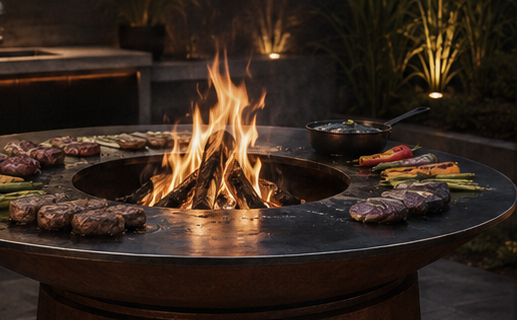
Both systems burn wood, but they create very different cooking environments. A live-fire plancha exposes the cook to the flame and steel surface, while a refractory oven stores heat inside an enclosed chamber for pizza, bread, roasting and retained-heat cooking.
Apollo NZ Global EditorialPublished 2026-09-09Practical project guide
Planning guidance — final product and site requirements are confirmed per project.
01
Choose Vulcan when open plancha cooking is the priority
The Vulcan pathway suits searing, mixed menus, visible flame and social cooking around a broad circular steel plate. It is especially useful when the cooking process itself should be part of the outdoor gathering or guest experience.
02
Choose a refractory oven for enclosed high-heat cooking
Apollo’s wood-fired oven range is built around insulated refractory chambers for pizza, bread, roasting and retained-heat cooking. The oven creates a different thermal environment from an exposed steel plancha.
03
Some projects justify both
A larger outdoor kitchen or hospitality venue can use the systems for complementary jobs: open-fire searing and plancha cooking on one side, enclosed baking and roasting on the other. The value comes from a genuine menu need, not simply adding more appliances.
04
Plan support, fire and workflow together
Both pathways need appropriate placement, safe surrounding materials, fuel handling and project-specific fire considerations. Refractory ovens also bring substantial weight, lifting and flue planning, while a large Vulcan needs generous circulation around the full cooking perimeter.