Straight awnings keep things simple
A side awning can create quick shade and weather cover beside the vehicle without taking over the entire camp. It can suit short stops, cooking zones and travellers who value fast setup.

Adventure · Adventure
Both straight and wraparound awnings can transform how a vehicle camp works. The useful difference is how much shelter the trip needs and how much setup, weight and vehicle coverage make sense.
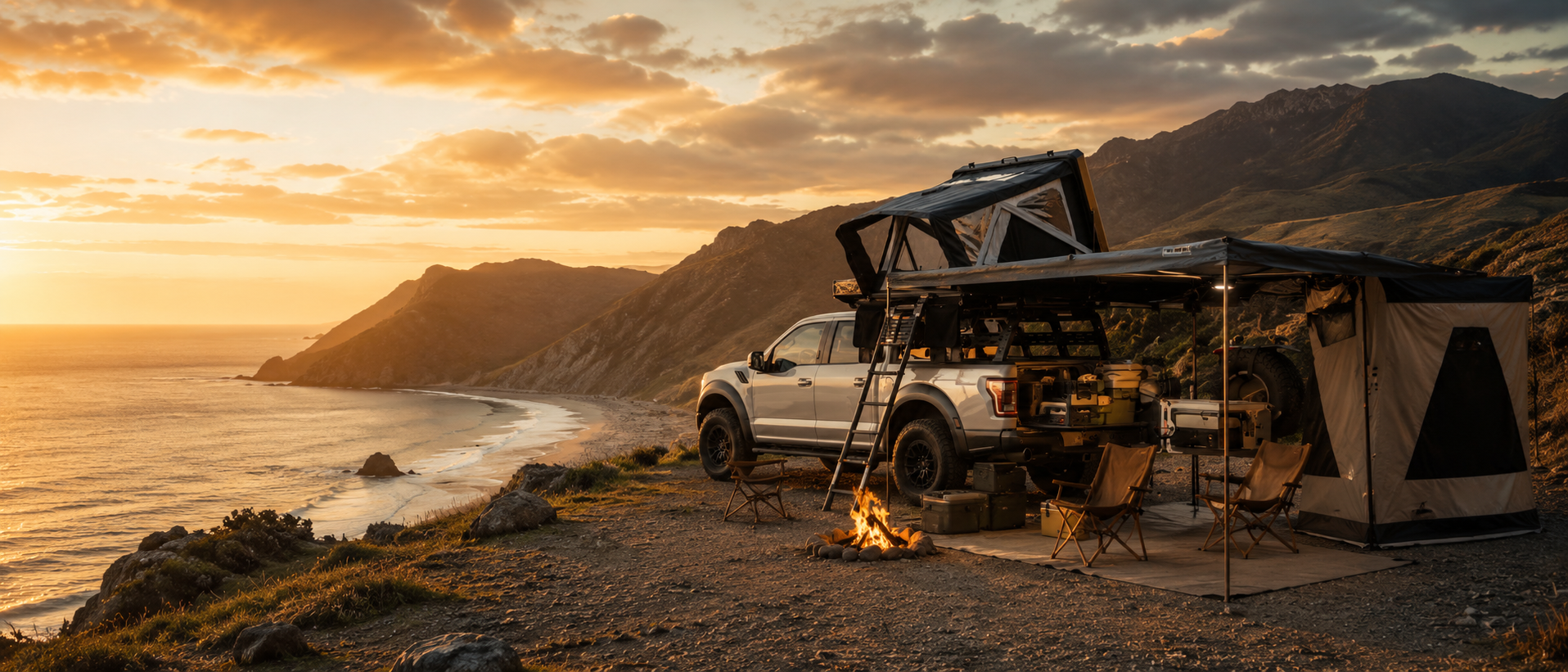
A side awning can create quick shade and weather cover beside the vehicle without taking over the entire camp. It can suit short stops, cooking zones and travellers who value fast setup.
Wraparound shelter can cover the side and rear of the vehicle, making it useful for longer stays and more weather-exposed camps. The larger format may also create more poles, guying or packing considerations depending on the setup.
Doors, tailgates, canopy openings and rooftop-tent access should remain practical when the awning is deployed. The best shelter layout follows the way people move around the actual vehicle.
A large awning is most valuable when the protected space is genuinely used. Fast overnight touring may favour a smaller system, while base-camp travel can justify more shelter.
Move from article to project