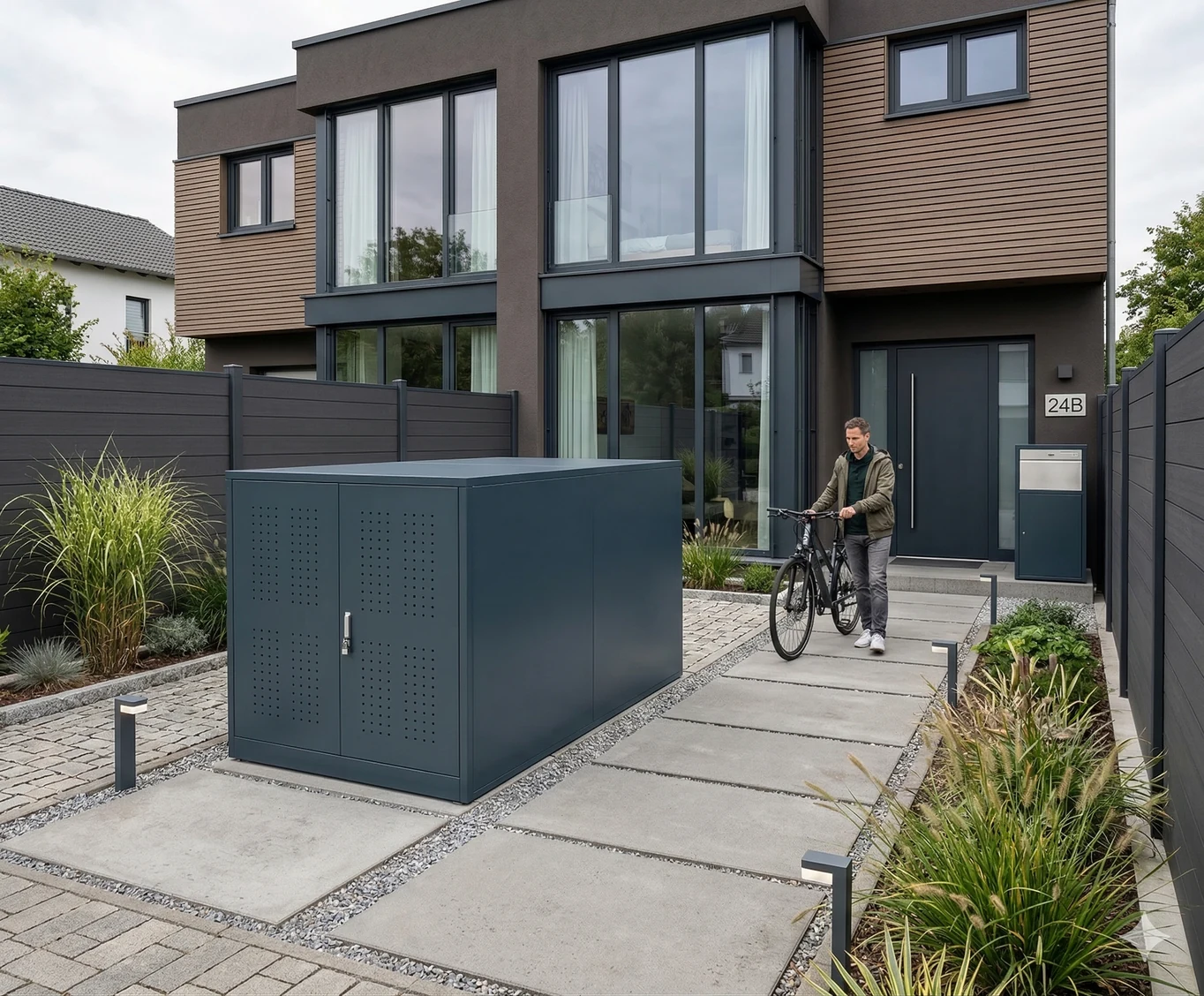
Public Realm & Development · Active mobility guide
Bike, Scooter & Active-Mobility Infrastructure
Active-mobility infrastructure works best when it is on the route people actually use. Location, approach, storage format, security, weather protection and service access should be considered before rack count or shelter style is selected.
Planning guidance — final supplied configuration remains project-specific.
01
Start with the rider journey
Map how cyclists and scooter users reach the site, where they transition to walking and how close parking should be to the final destination. Infrastructure hidden in leftover space may remain underused even when capacity looks adequate on paper.
02
Choose the storage level
Short-stay racks, longer-stay shelters and more secure storage solve different needs. The project should define dwell time, security expectations, user groups and whether charging or controlled access is required.
03
Protect circulation and access
Bike and scooter parking should not obstruct pedestrian routes, entrances or maintenance access. Exact layout and accessibility requirements should be checked by the local designer against current destination rules.
04
Plan maintenance and replacement
Public-use hardware needs practical fixing, cleaning and replacement access. Shelter roofs, drainage and lighting also require ongoing service pathways where included.