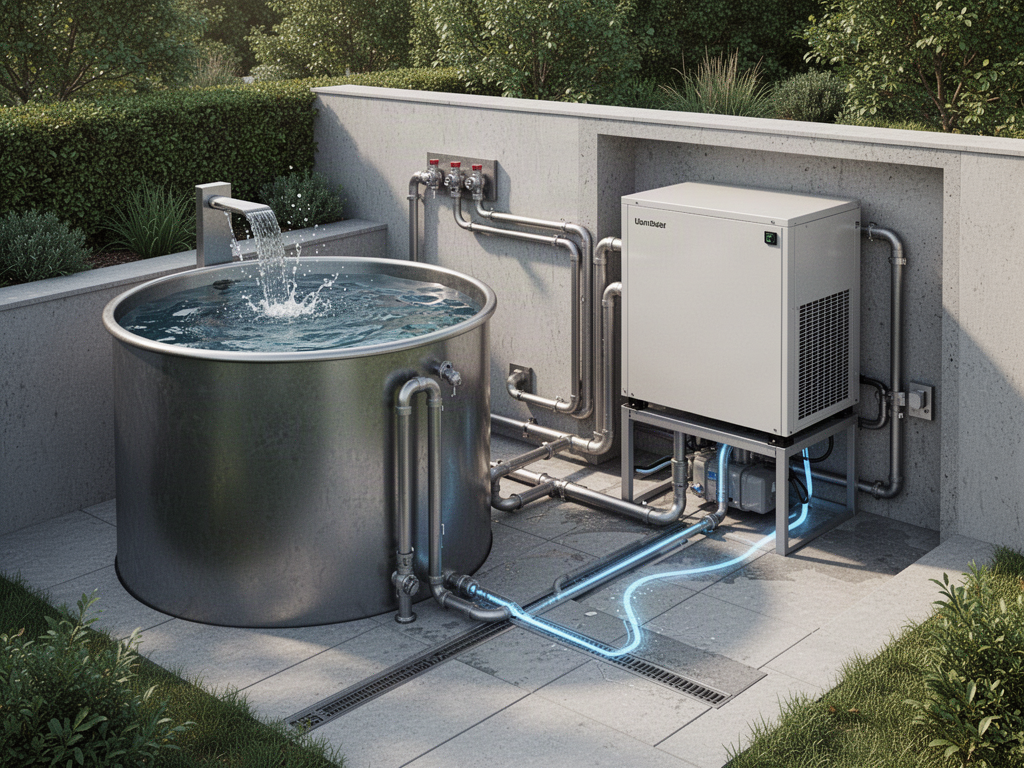
01Start with vessel volume and operating pattern
Record the intended number of users, operating hours, target temperature range, indoor or outdoor location and whether the system will be used privately, in hospitality or in a commercial wellness setting.
Those inputs influence the cooling, circulation and filtration pathway more than appearance alone.
Match the chiller to the real environment
Cooling capacity depends on water volume, ambient temperature, solar exposure, insulation, target temperature and recovery between users. Do not assume a chiller quoted for one climate or vessel size will perform the same way in every project.
Protect airflow, acoustics and service access
Chillers and pumps need the ventilation and clearances required by the exact equipment. Position the plant so hot discharge air, fan noise and routine servicing do not conflict with bedrooms, guest spaces, neighbouring properties or enclosed architectural screens.
Plan water quality and cleaning
Circulation, filtration, treatment, filling, draining and cleaning should suit the operating model and destination requirements. Higher-use hospitality or commercial installations may need a more structured water-management pathway than a private residential plunge.
Coordinate power and drainage before finishes
Electrical supply, protection and isolation should be confirmed by the local electrician for the final equipment package. Drainage and overflow routes should be planned before decks, paving and landscape work close around the unit.
Keep wellness claims measured
Apollo supplies cold plunge systems as recreation and wellness-space products. Medical, therapeutic, recovery or disease-treatment outcomes should not be promised without appropriate evidence for the exact claim and context.