Estimate daily use honestly
Drinking, cooking, washing and cleaning all draw from the same supply. Remote travel may justify a larger reserve, while serviced touring can operate with less onboard capacity.

Adventure · practical guide
There is no single correct water-tank size for overlanding. The right capacity depends on the number of travellers, how often water can be replenished and how much payload the vehicle can realistically dedicate to water.
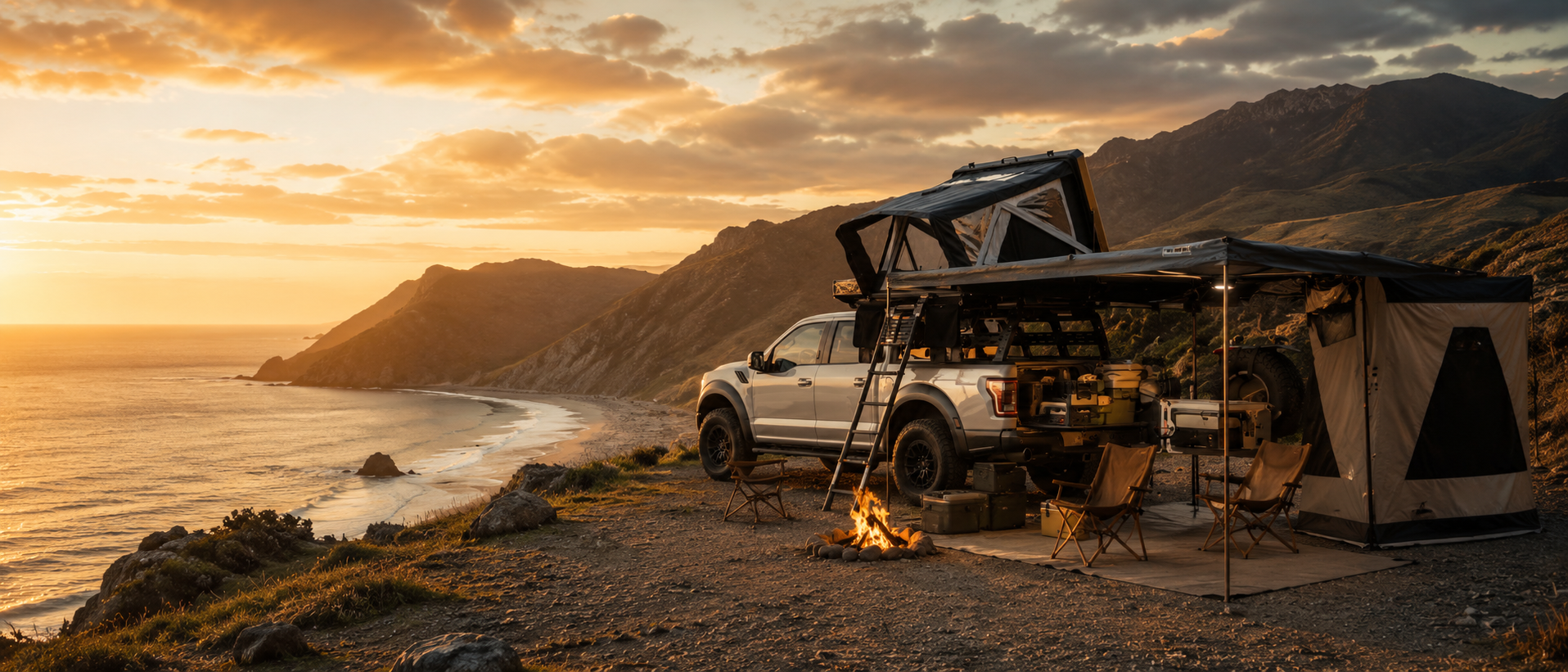
Drinking, cooking, washing and cleaning all draw from the same supply. Remote travel may justify a larger reserve, while serviced touring can operate with less onboard capacity.
Every litre adds roughly a kilogram before the tank, pump and fittings are counted. Water capacity should therefore be planned as part of the vehicle payload, not as free storage.
Large water loads should be positioned with vehicle balance and access in mind. A convenient filler point is useful, but the tank location should also respect the broader load layout.
Filling, draining and cleaning should be practical. Hoses, fittings and pumps should remain accessible enough to inspect or replace during longer trips.
Move from guide to project