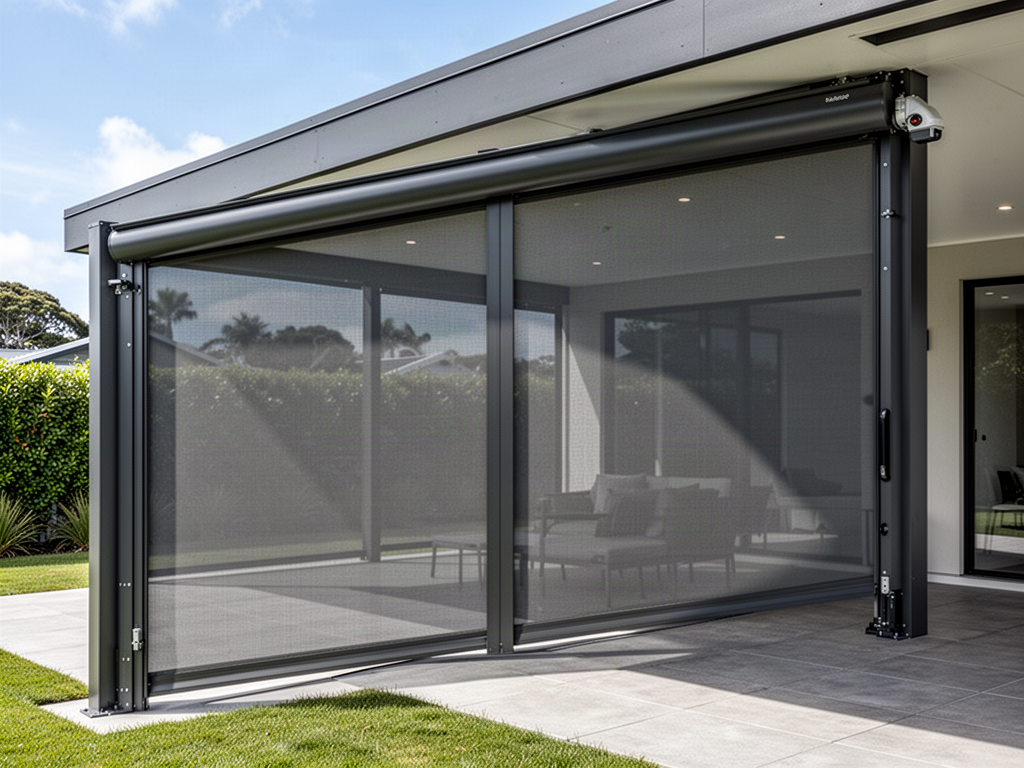
Outdoor Blind Selection: Opening Size Is Only the First Question
A blind that physically fits an opening is not automatically the right blind. Wind exposure, fabric choice, operating habits, structure and the way the space is used can matter just as much as width and drop.
Planning guidance — final product and site requirements are confirmed per project.
01
Measure the real opening
Record clear width, height, fixing zones, post or wall construction, obstructions and where the cassette and guides can physically sit. Large-format openings should be treated as a structural interface, not just a fabric measurement.
02
Choose fabric around the outcome
Mesh openness changes the balance between shade, view, airflow and privacy. Clear PVC and blockout pathways solve different problems again. The fabric decision should follow the use of the space rather than a colour sample alone.
03
Plan controls and behaviour
Manual, motorised and selected hybrid pathways suit different operating patterns. Sensors and automation can be valuable, but severe-weather rules still matter and users need to understand when a blind should be retracted.
04
Allow for the environment
Coastal salt, dust, windborne debris and frequent wetting can change maintenance needs. A large exposed blind should be planned around cleaning, inspection and access from the beginning.