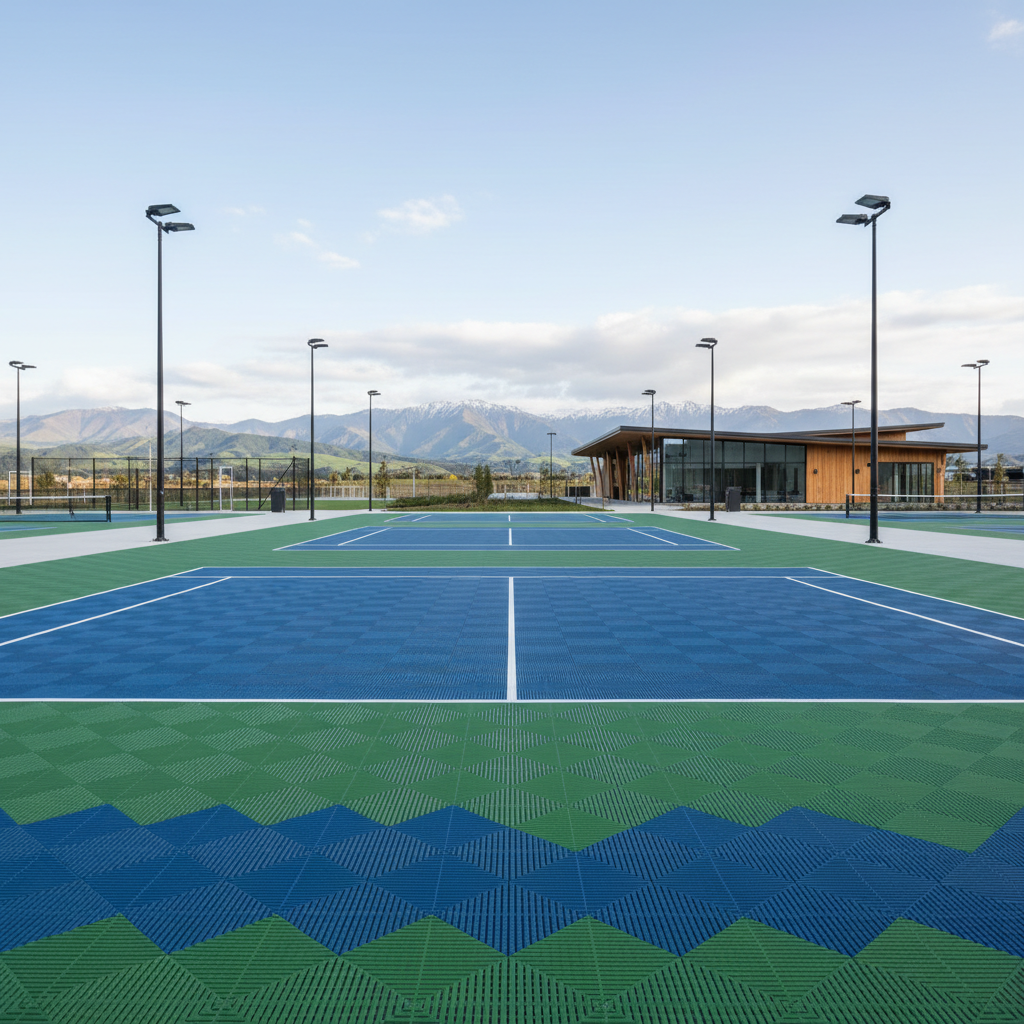
Can Sports Tiles Go Directly Over Concrete or Asphalt?
Modular sports tiles are often installed over existing hard surfaces, but 'hard' does not automatically mean 'ready'. The condition of the concrete or asphalt underneath still controls drainage, flatness and long-term performance.
Planning guidance — final product and site requirements are confirmed per project.
01
Check that the base is stable
Active cracking, settlement, loose asphalt and structural movement should be dealt with before the tile layer is considered. Interlocking tiles can bridge minor surface texture, but they do not repair a base that is continuing to move.
02
Review falls and ponding
Water can pass through an open tile system and then become trapped if the slab beneath has poor falls. Existing drainage routes, low points and perimeter discharge should be checked before installation.
03
Clean and prepare the surface
Oil, loose material, weeds, sharp debris and local high spots can interfere with installation and maintenance. Preparation is usually simpler than for a bonded finish, but it still matters.
04
Confirm the whole court interface
Door thresholds, fencing, drains, net posts, edging and transitions may all be affected by the extra surface build-up. Reviewing those details early avoids creating trip edges or blocked drainage after the tile is installed.