Louvre architecture
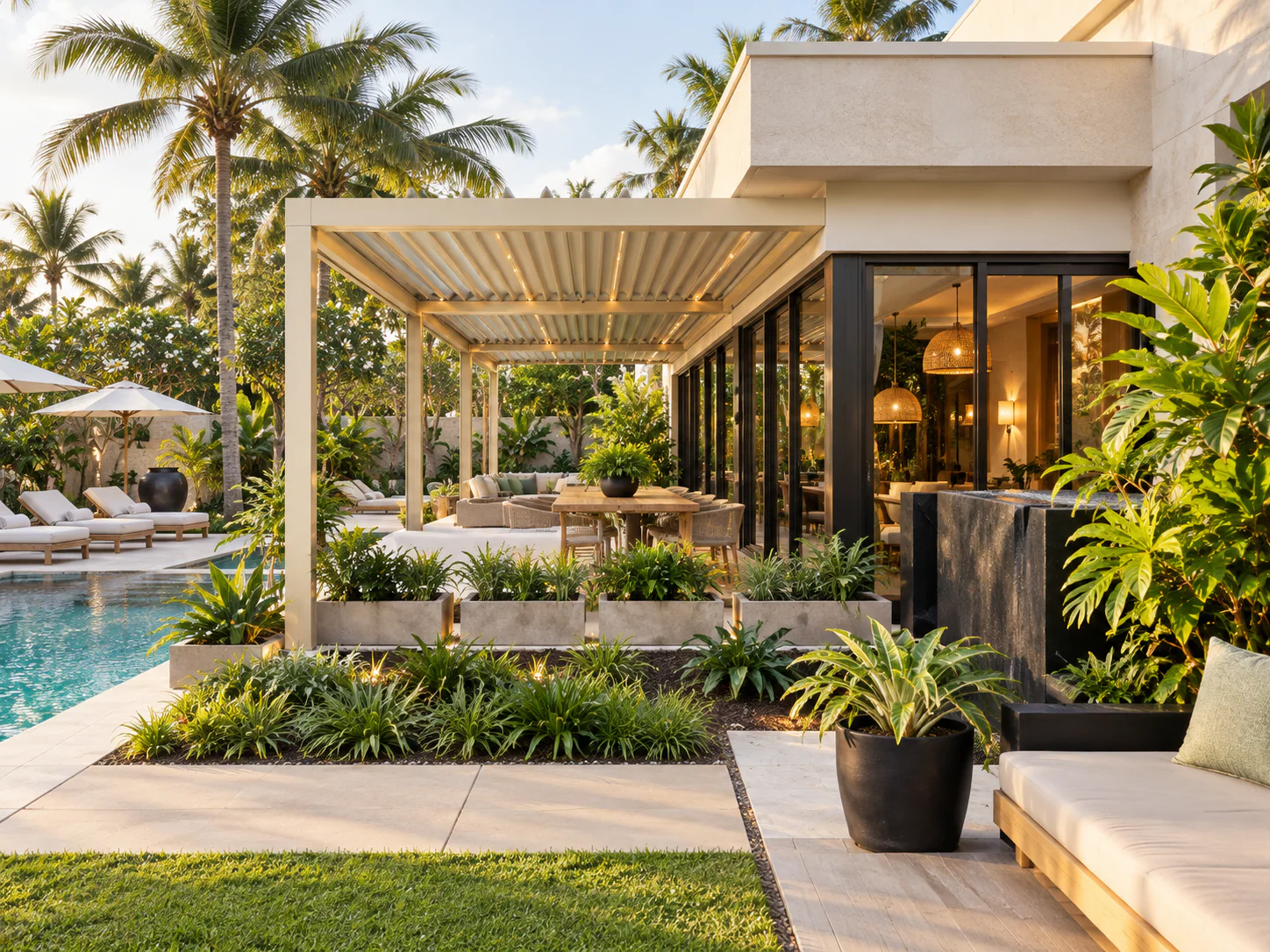
Useful for restaurants, villas and terraces that value adjustable sun, ventilation and closure while retaining a permanent architectural frame.
 Fiji
Fiji Fiji / Decision guide
A guest terrace, pool deck, villa, restaurant and event lawn can need very different levels of weather protection. The choice should be made by zone and then checked against the actual wind, coastal, drainage and maintenance brief.
Direct answer
Use ARKEN where adjustable architectural louvres and bespoke integration lead; FASGAR where fixed or retractable roof cover is the stronger requirement; and KAVORA where shade, umbrellas, awnings or lighter retractable coverage better suits the guest zone.
Project decision
These comparisons are designed to narrow the project route. They do not replace local engineering, authority review or exact-system technical evidence.
Useful for restaurants, villas and terraces that value adjustable sun, ventilation and closure while retaining a permanent architectural frame.
Useful where a more continuous fixed or retractable overhead cover is required and drainage, mechanisms and local structural interfaces can be planned.
Useful for pool decks, guest seating, event and landscape zones where shade may matter more than creating a fully roofed outdoor room.
Comparison matrix
No pathway implies cyclone suitability without project-specific evidence.
| Factor | ARKEN | FASGAR | KAVORA |
|---|---|---|---|
| Control | Rotating / selected retracting louvre | Fixed / retractable roof | Shade / awning / umbrella |
| Rain strategy | Closable roof plane | Roof-led | Varies by family |
| Typical zone | Terrace / villa / dining | Dining / event / circulation | Pool / landscape / terrace |
| Key review | Wind + drainage + structure | Wind + drainage + mechanism | Wind + fixing + fabric |
Project brief
Frequently asked
No. The decision page is a shortlisting tool. Final suitability depends on the actual site, use, dimensions, exposure, selected system, available evidence and local project requirements.
Apollo is supply-led. Local engineering, approvals, foundations, services, installation and other site works remain with the appointed local project team unless a written project scope expressly includes something different.
No. Apollo uses a manual project-brief process so the selected system, quantities, destination, freight and project interfaces are reviewed before pricing.
Next step
Send the site, dimensions, use, quantities, exposure information and known local requirements. Apollo can then review the relevant systems, evidence, freight and supply scope.