ARKEN louvre route
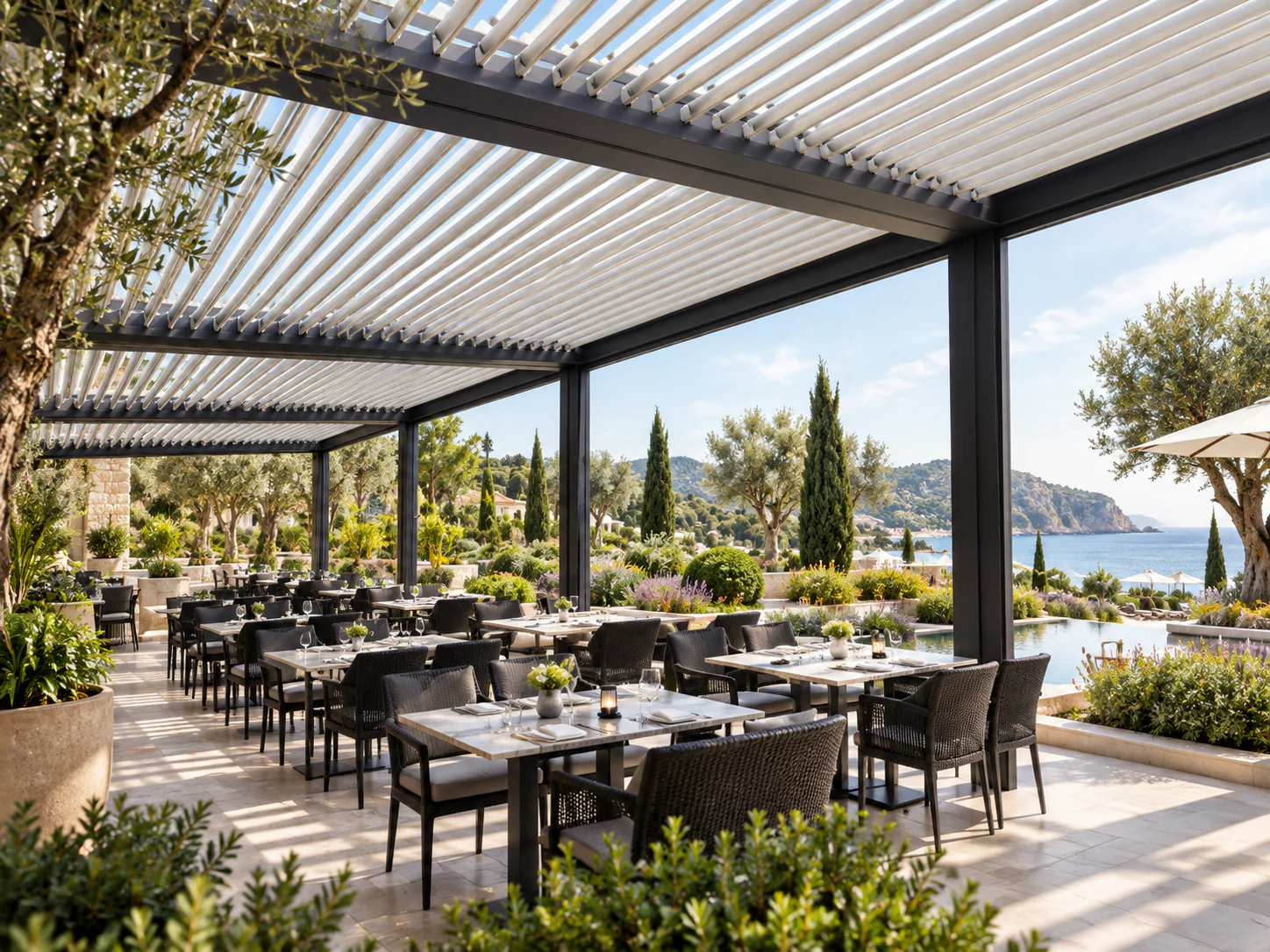
For premium terraces where adjustable solar control, ventilation, closable roof behaviour and integrated architecture matter.
 Australia
 Australia / Decision guide
Restaurants, hotels, clubs and resort terraces can need very different levels of weather control. The useful first decision is whether the space needs an architectural outdoor room, a fixed or retractable roof, or shade-led coverage.
Direct answer
Start with ARKEN when adjustable architectural louvres and integrated outdoor-room control lead; FASGAR where fixed or retractable non-louvred roof cover is the main requirement; and KAVORA where umbrellas, awnings, membrane shade or lighter retractable coverage better match the guest zone.
Project decision
These comparisons are designed to narrow the project route. They do not replace local engineering, authority review or exact-system technical evidence.
For premium terraces where adjustable solar control, ventilation, closable roof behaviour and integrated architecture matter.
For projects where fixed aluminium or retractable fabric overhead cover is the stronger operating requirement.
For pool, dining, event and landscape zones where shade footprint, freestanding coverage or façade-mounted systems are more important than a fully roofed room.
Comparison matrix
Wind, bushfire context where relevant, coastal exposure, drainage and local structural interfaces remain project-specific.
| Factor | ARKEN | FASGAR | KAVORA |
|---|---|---|---|
| Primary control | Louvre angle / closure | Fixed or retractable roof | Shade footprint |
| Architectural integration | High | High | Medium to high |
| Typical zone | Terrace / dining / villa | Dining / event / circulation | Pool / landscape / terrace |
| Key review | Structure + drainage + controls | Structure + roof + drainage | Wind + fixing + fabric |
Project brief
Frequently asked
No. The decision page is a shortlisting tool. Final suitability depends on the actual site, use, dimensions, exposure, selected system, available evidence and local project requirements.
Apollo is supply-led. Local engineering, approvals, foundations, services, installation and other site works remain with the appointed local project team unless a written project scope expressly includes something different.
No. Apollo uses a manual project-brief process so the selected system, quantities, destination, freight and project interfaces are reviewed before pricing.
Next step
Send the site, dimensions, use, quantities, exposure information and known local requirements. Apollo can then review the relevant systems, evidence, freight and supply scope.