Confirm the support before the mechanism
The system needs a suitable structure to carry its loads and maintain alignment. Existing walls, beams or a dedicated frame should be reviewed before final width and projection are frozen.

Outdoor Living · Movis retractable systems
Motorisation is only one part of a retractable-roof project. A reliable installation also depends on the supporting structure, clean operating geometry, drainage and the ability to reach motors or moving components for future service.
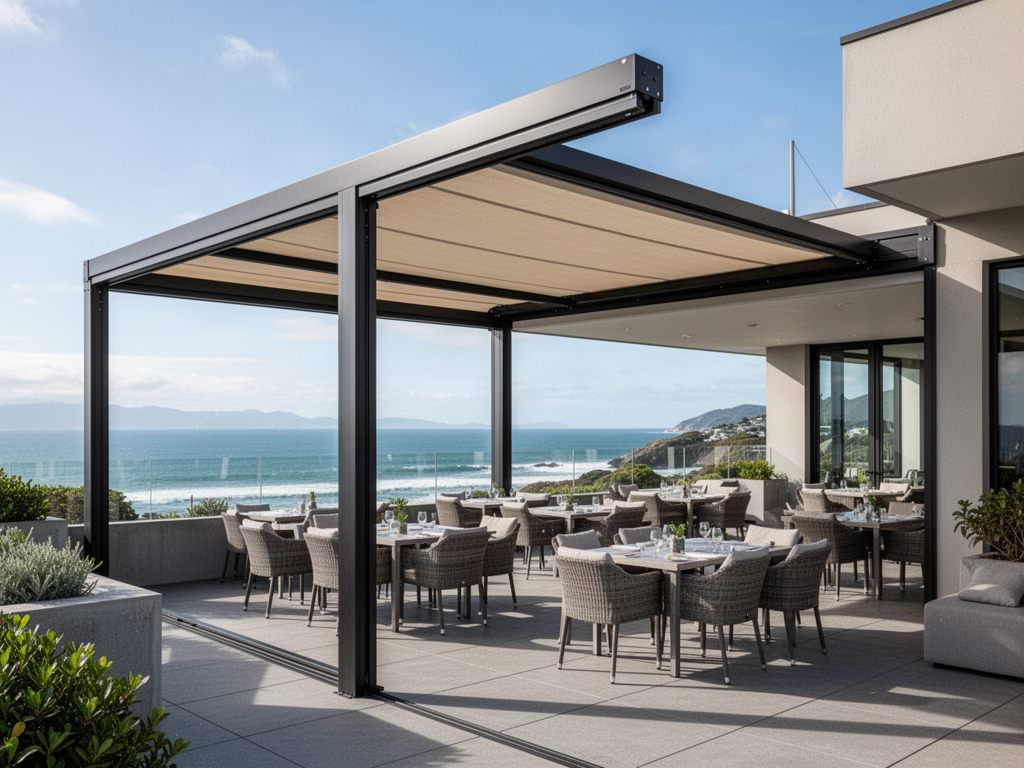
The system needs a suitable structure to carry its loads and maintain alignment. Existing walls, beams or a dedicated frame should be reviewed before final width and projection are frozen.
Motorised operation requires an electrical pathway and sensible control location. It is easier to coordinate cabling before ceilings, cladding or landscaping make access more difficult.
Closing the roof creates a weather-control surface, so collected water still needs an intentional drainage path. Local gutter, discharge and surrounding surface levels should be part of the project design.
Motors, controls and moving components should remain inspectable after installation. A visually clean project should not permanently conceal the very components that may need adjustment or maintenance later.
Move from article to project