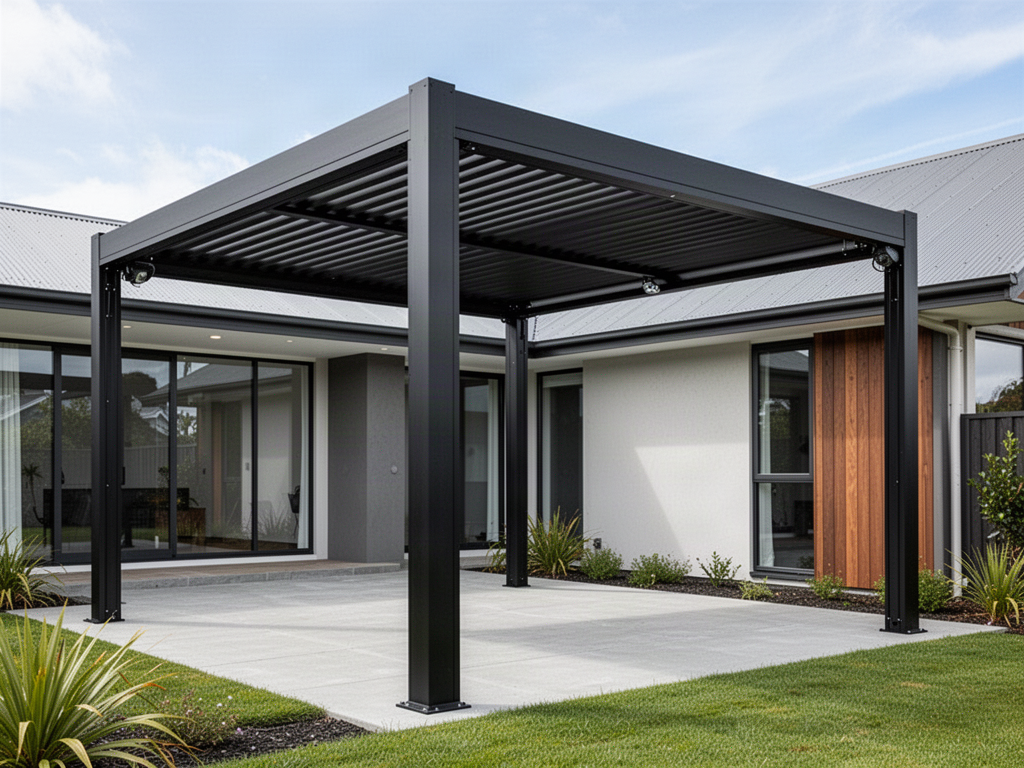
Louvre Pergolas and Wind Exposure: What the Published Rating Does and Does Not Mean
A published wind figure is a useful product reference, but it is not a substitute for reviewing the exact site and configuration. Location, mounting method, enclosure and foundations all influence how a louvre structure should be considered for a real project.
Apollo NZ Global EditorialPublished 2026-09-08Practical project guide
Planning guidance — final product and site requirements are confirmed per project.
01
Use the published figure as selection guidance
The current AEGIS PRIME information lists wind resistance up to approximately 150 km/h for applicable configurations. Final suitability still depends on the selected size, site and project-specific structural requirements.
02
Exposure can change over a short distance
A sheltered courtyard and an elevated coastal deck may be in the same town but experience very different wind conditions. Photos, surrounding terrain and the relationship to nearby buildings help describe the real exposure.
03
Side enclosures change the way the structure behaves
Blinds, glass or solid panels can alter wind pressure and airflow around a pergola. Future enclosure intentions should therefore be included in the original project brief rather than added later without review.
04
Foundations and fixings remain part of the project
The pergola frame cannot be considered independently from what supports it. Local foundations, attachment points and approvals should be confirmed for the actual site before installation.